
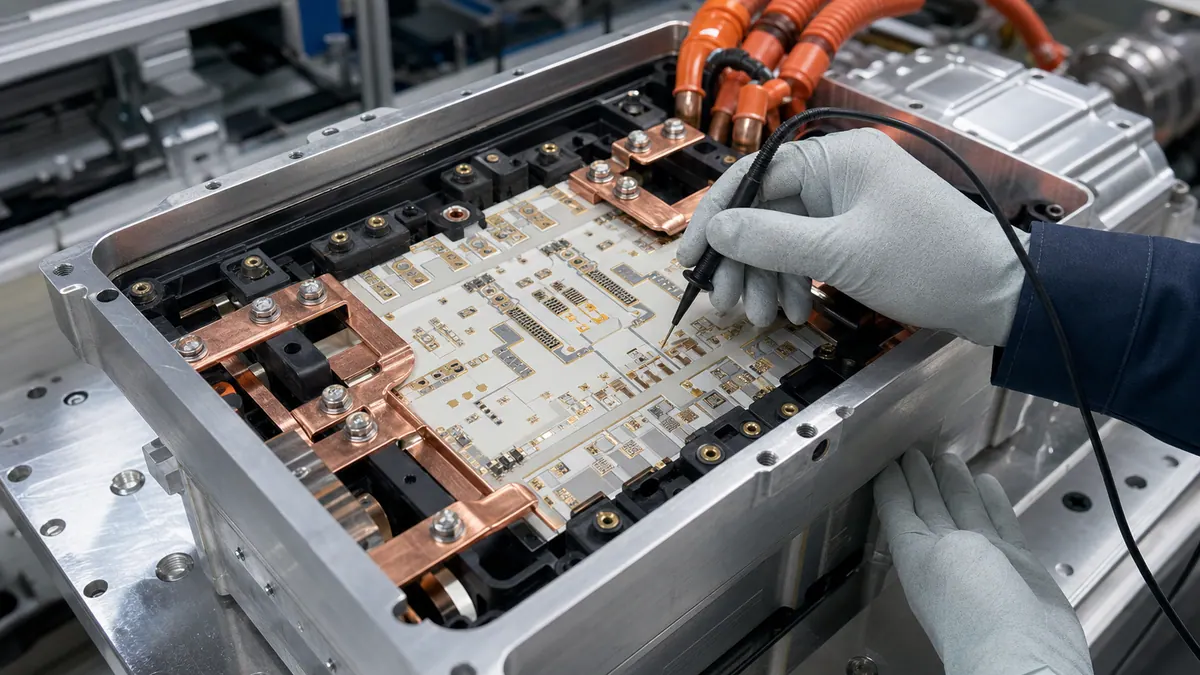
Ceramic thick film hybrids are often considered when a conventional FR4 PCB cannot meet temperature, thermal, vibration, or long-term reliability requirements. The comparison should be based on the full application: heat source, substrate, metallization, resistor function, assembly method, environment, and test plan.
Why ceramic thick film can replace FR4 in demanding applications
FR4 is widely used and cost-effective, but its organic base limits thermal conductivity and high-temperature capability. Ceramic substrates such as alumina and aluminum nitride can spread heat more effectively and tolerate harsher environments. Thick film processing adds printed conductors, resistors, dielectric layers, and sometimes multilayer interconnect on that ceramic base.
Thermal management review
- Identify semiconductor junctions, heater zones, power resistors, or other hot spots.
- Choose alumina when balanced cost and stability are suitable.
- Choose AlN when the thermal path is the dominant requirement.
- Review conductor width, ground plane, die attach area, backside metallization, and heat sink interface together.
Hybrid assembly options
A ceramic thick film substrate can support wire bonding, die attach, soldered components, conductive epoxy, encapsulation, and selective protective coatings. Assembly choices affect metallization, surface finish, cleanliness, pad geometry, and final inspection.
Design and layout considerations
- Single-side, double-side, or multilayer conductor routing.
- Metallized holes, edge connections, or separate ground planes when needed.
- Printed resistor networks, sensor tracks, or heater patterns integrated into the substrate.
- Open/short, insulation, resistor, bondability, solderability, and thermal test criteria.
When FR4 may still be better
FR4 may remain the better choice when the design is low temperature, cost-sensitive, mechanically simple, and does not need integrated fired resistors or ceramic thermal performance. The decision should be made by engineering review, not by material preference alone.
RFQ data for conversion projects
For FR4-to-ceramic conversion or legacy hybrid replacement, send the original schematic, PCB files, thermal problem description, component list, target dimensions, operating environment, assembly method, and expected validation standard.