
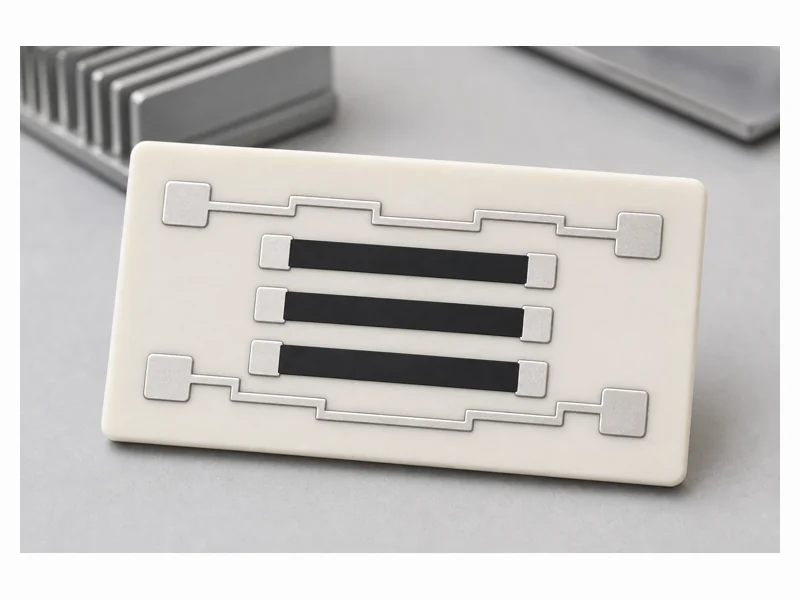
Custom ceramic thick film circuit boards for OEM electronics
Chipsimple manufactures custom ceramic thick film circuit boards for projects that need stable electrical behavior, compact structure, high temperature resistance, and better thermal performance than many ordinary PCB materials. These circuits are commonly used in sensors, automotive control modules, power electronics, RF communication assemblies, medical equipment, and industrial devices where reliability is more important than a generic board price.
Our engineering review starts from the buyer’s drawing, sample, electrical requirement, working temperature, installation space, and expected annual quantity. Based on the application, we can evaluate alumina ceramic, aluminum nitride, conductor paste, resistor paste, terminal style, surface finish, and process route. This helps overseas buyers confirm whether the design is suitable for prototype sampling, design optimization, or batch production.
Key manufacturing options
- Alumina and AlN ceramic substrate options for different thermal and insulation requirements.
- Custom conductor paths, resistor patterns, pads, terminals, and mounting features.
- Screen printing, sintering, laser trimming, inspection, and electrical testing support.
- Prototype review and repeatable batch production for long-term OEM projects.
Typical applications
Custom ceramic thick film circuits are suitable for fuel level sensing, throttle position sensing, compact heaters, LED thermal management, power control modules, medical instrumentation, microwave communication parts, and harsh environment signal control. Ceramic substrates help engineers reduce space, manage heat, and maintain stable electrical output in demanding operating conditions.
Quality and RFQ information
For accurate quotation, please send drawings, Gerber files if available, substrate preference, dimensions, resistance or conductor requirements, quantity, operating temperature, and target lead time. Chipsimple will review manufacturability, testing requirements, and production risk before quoting.