
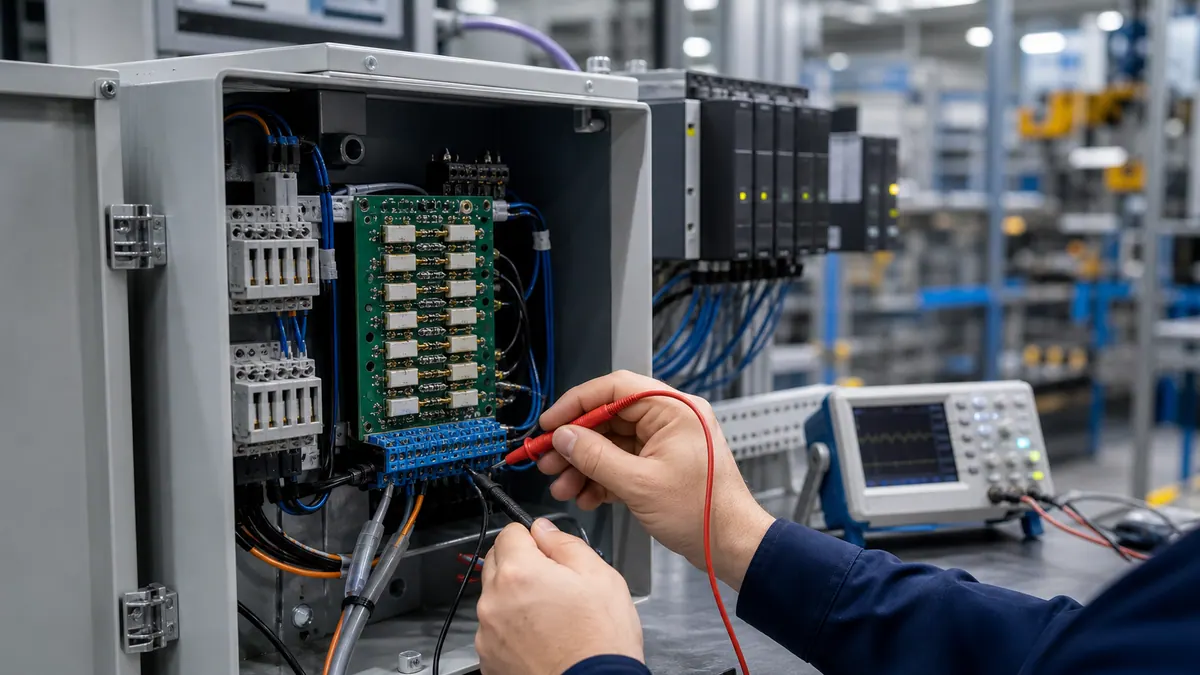
A thick film circuit is an electronic circuit made by printing conductive, resistive, and dielectric pastes onto an insulating substrate and firing them at elevated temperature. In industry, buyers may also call it a thick film PCB, ceramic PCB, ceramic thick film circuit, hybrid circuit, or thick film resistor circuit. The exact term depends on whether the project emphasizes the substrate, the printed resistor network, the heater pattern, or the final assembled module.
Basic structure of a thick film circuit
A typical custom thick film circuit includes a ceramic substrate such as alumina or aluminum nitride, printed conductor traces, printed resistor elements, dielectric crossover or insulation layers, terminal pads, and sometimes mounted chips or discrete components. In hybrid microcircuits, bare dies may be attached and wire bonded to the printed substrate.
How thick film differs from ordinary PCB
Ordinary FR4 PCB designs rely on laminated copper foil and organic insulation. Thick film circuits use printed functional pastes on ceramic or metal-based substrates. This makes the technology useful when the project needs higher temperature capability, better thermal conductivity, stable printed resistors, compact hybrid assembly, or rugged operation in automotive and industrial environments.
Core process
The main process is additive: screen print the paste pattern, dry it, fire it, and repeat as needed. Conductors, resistors, and dielectric layers can be printed in sequence. Resistors are often laser trimmed after firing to reach the required resistance or circuit output.
Common applications
- Automotive fuel level sensor circuits and throttle position sensor resistors.
- Stainless steel and ceramic thick film heating elements.
- Power electronics and thermal management modules.
- Medical, aerospace, and industrial sensor assemblies.
- RF, microwave, and communication ceramic circuit substrates.
When thick film is a good fit
Thick film is worth evaluating when the design needs stable resistance on the substrate, compact interconnection, high working temperature, high reliability under thermal cycling, or a ceramic substrate with better heat spreading than organic PCB materials.