
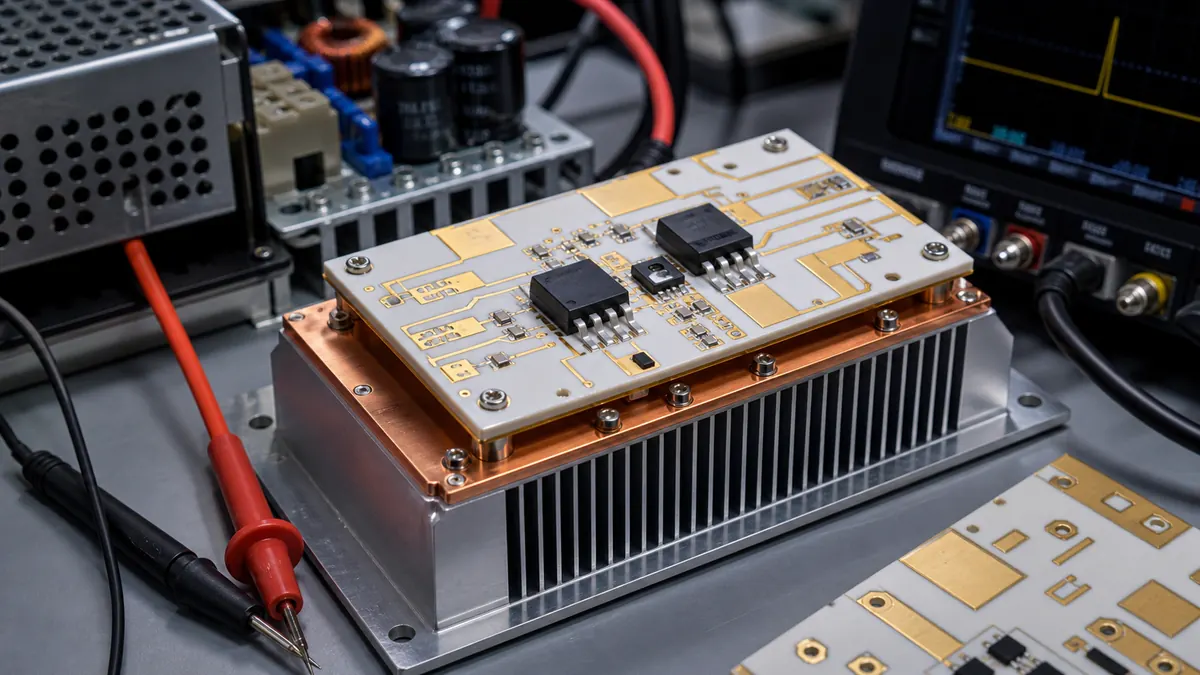
High temperature electronics often fail when the substrate, conductor system, resistor pattern, solder joint, coating, or package cannot tolerate the actual operating environment. Thick film ceramic circuits are considered when FR4 assemblies do not provide enough thermal stability, insulation, or long-term reliability.
For harsh environments, a thick film circuit should be reviewed as a full system: substrate, printed layer stack, terminal method, housing interface, heat path, moisture exposure, vibration, and test plan. A ceramic substrate alone does not guarantee reliability if the surrounding design is not compatible.
Common harsh environment drivers
- High working temperature or repeated thermal cycling.
- High vibration, shock, or mounting stress.
- Power density and local hot spots.
- Fuel, oil, humidity, cleaning fluid, or chemical exposure.
- Need for compact thermal management or FR4 to ceramic conversion.
Substrate selection
Alumina is widely used for stable printed resistors, sensor tracks, and cost-effective ceramic circuits. Aluminum nitride is selected when high thermal conductivity is the dominant design need. Stainless steel, aluminum, and PI routes are considered for heater structures or special mechanical requirements.
Reliability review
| Risk | Review method |
|---|---|
| Resistor drift | Check paste system, power density, trim geometry, aging, and thermal cycling. |
| Insulation failure | Review dielectric thickness, spacing, humidity, voltage, and cleanliness. |
| Adhesion loss | Review substrate surface, firing profile, conductor system, and mechanical stress. |
| Thermal hot spot | Review heat spreading, mounting pressure, substrate thickness, and housing interface. |