
Application
Marine Level Sensor Thick Film Circuit Applications
Marine Level Sensor Thick Film Circuit Applications: material, substrate, process, and RFQ guidance for marine level sensing.
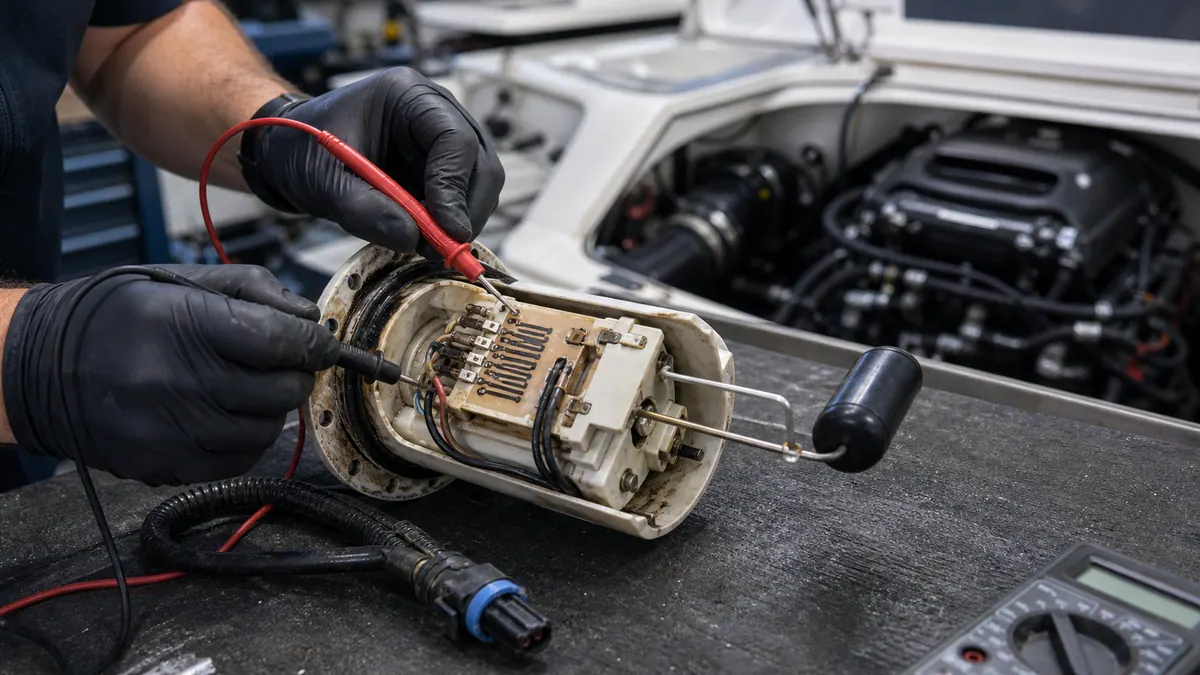
Marine Level Sensor Thick Film Circuit Applications require circuit materials that match the electrical, thermal, mechanical, and environmental limits of the finished product. A useful design review should connect the application requirement to the substrate, printed film, metallization, and test plan.
Application requirement
In marine level sensing, the circuit is usually selected because ordinary PCB construction may not provide the required thermal stability, compact resistor geometry, heater pattern, insulation, or long-term signal repeatability. The preferred route is often ceramic resistor cards, but final selection depends on the drawing and working conditions.
Recommended technology routes
- Use alumina thick film when the project needs a stable ceramic platform with printed conductors or resistors at controlled cost.
- Use AlN or a thermal ceramic route when heat spreading and CTE matching are more important than lowest substrate cost.
- Use thin film when fine geometry, precision resistor behavior, low parasitics, or RF layout control is the main design driver.
- Use stainless steel, aluminum, ceramic, or PI heater routes when the circuit's primary function is controlled heating.
Design and reliability concerns
The highest-risk items for this application are humidity, salt exposure, vibration. These should be reviewed before tooling because changing the substrate or metallization after testing can change output, assembly behavior, and qualification results.
| Application focus | marine level sensing |
|---|---|
| Likely circuit route | ceramic resistor cards |
| Key reliability concerns | humidity, salt exposure, vibration |
| Useful validation | electrical output check, thermal test, environmental exposure, visual inspection, and application-specific functional test |
| RFQ priority | send drawings, samples, target curve or power data, operating conditions, and expected quantity |
Questions to answer before RFQ
- What is the required output: resistance value, resistance curve, heater power, signal stability, or RF performance?
- What materials will touch the circuit during service: fuel, oil, water, humidity, cleaning chemicals, air, vacuum, or encapsulant?
- What mechanical forces affect the circuit: contact wiping, vibration, mounting stress, thermal expansion, or wire bonding?
- What tests are mandatory before production approval?
Related product and knowledge pages
- Position sensor resistive elements
- Thick Film PCB manufacturing
- Ceramic thick film circuit
- Alumina thick film PCB
- AlN thick film PCB
- Printed thick film resistor
- Thick film manufacturing process
Engineering note
Application pages are not a substitute for a validated drawing. They are intended to help engineers prepare a clearer RFQ package and avoid selecting the wrong ceramic circuit route early in the project.