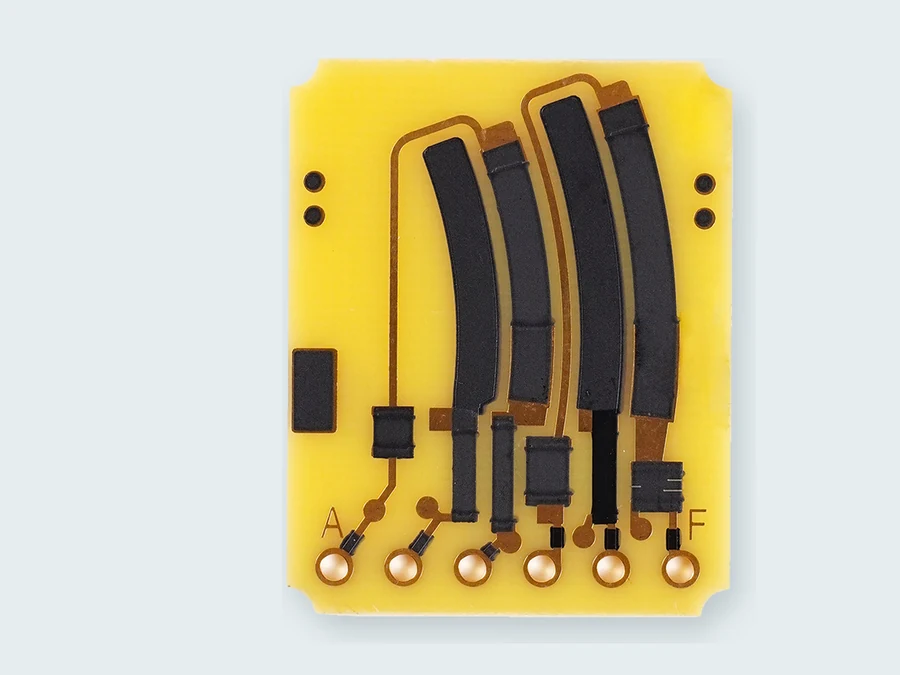
FR4 Printed Carbon Resistor PCB
Fixed or functional printed resistance integrated with the copper circuit and final assembly.
Open product page
Polymer carbon ink on FR4
Carbon ink can add fixed resistance, potentiometer tracks, wear contacts, sensor paths, or jumpers to an FR4 assembly when ink, copper finish, geometry, cure, contact, and measurement are specified as one route.
Route definition
Released product pages
Start from the nearest product family, then confirm the drawing, material system, operating conditions, and required evidence.
Fixed or functional printed resistance integrated with the copper circuit and final assembly.
Open product page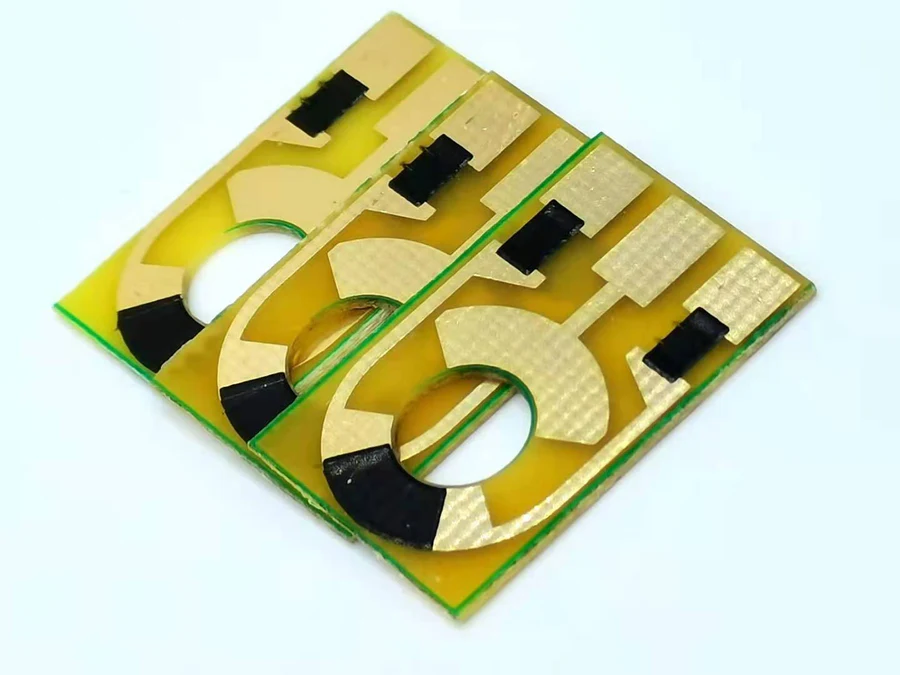
Carbon contact areas reviewed with mating material, force, travel, abrasion, contamination, and life target.
Open product page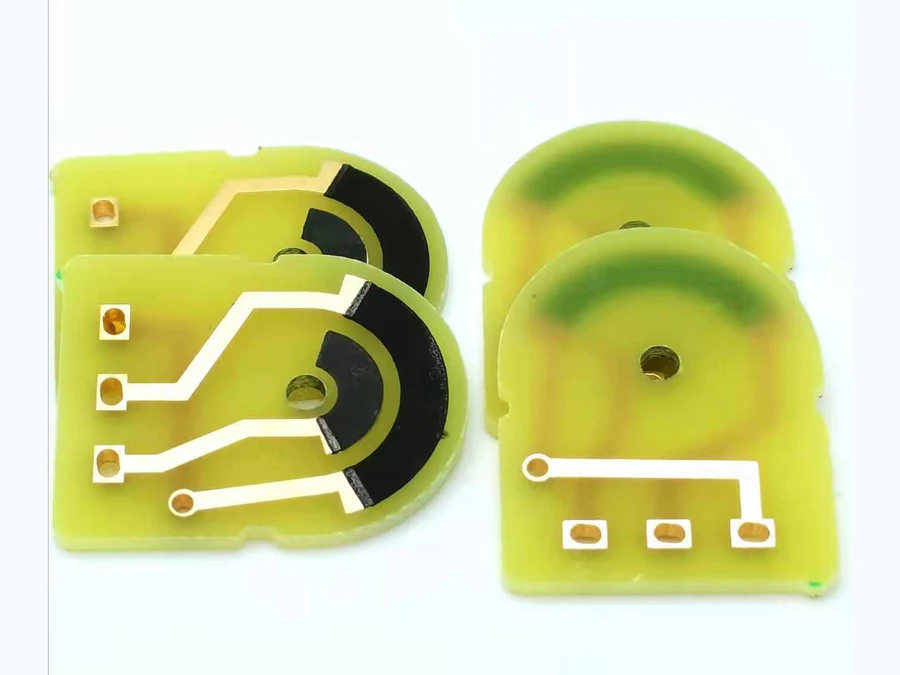
Rotary or linear output geometry specified with end resistance, curve, active travel, and wiper interface.
Open product page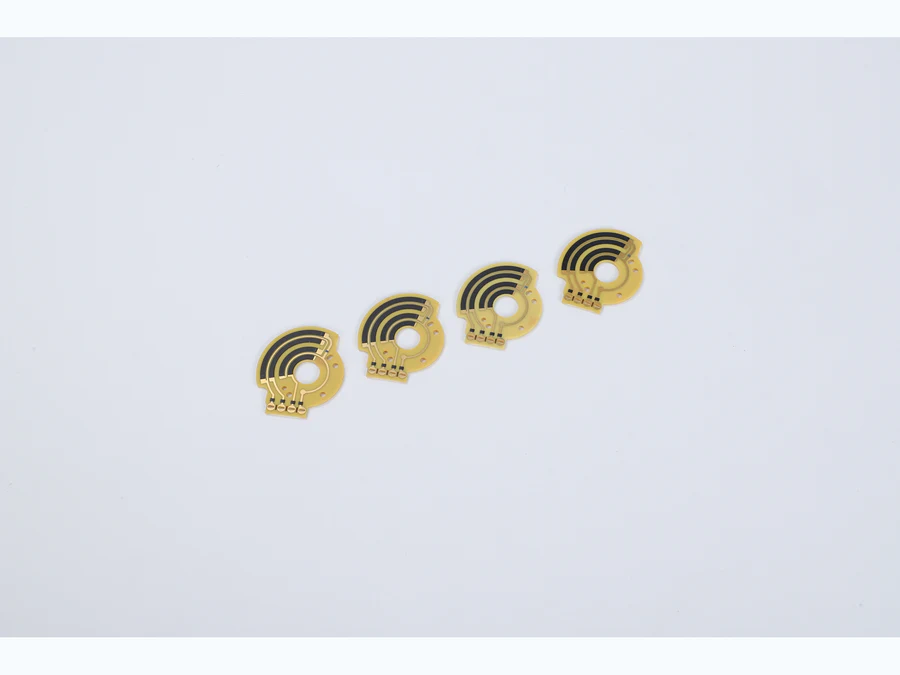
Angular tracks and collector geometry reviewed against the shaft, wiper, output curve, and validation fixture.
Open product page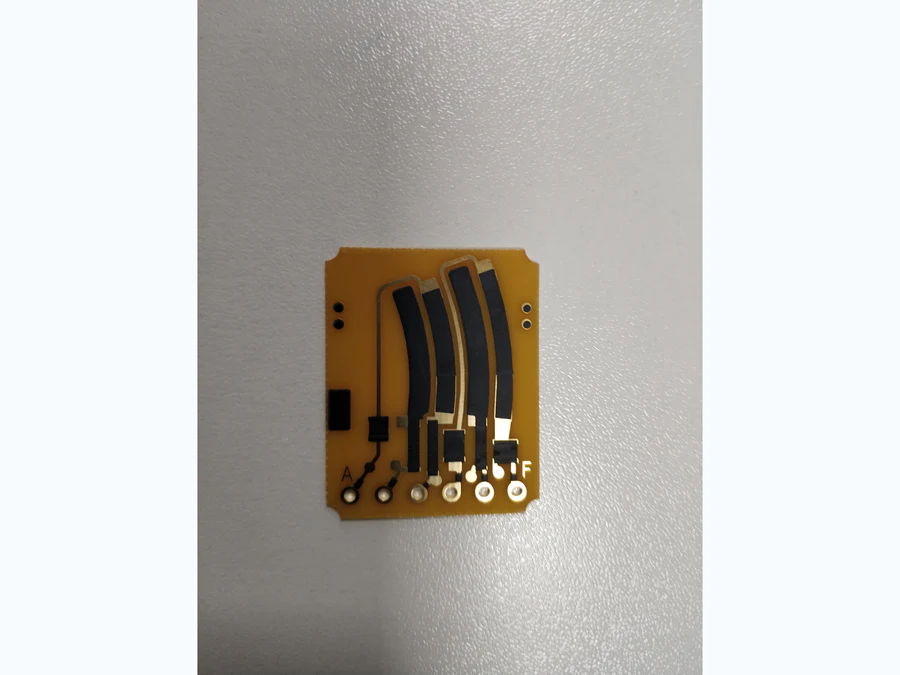
Printed jumper features coordinated with copper spacing, insulation, cured resistance, and downstream assembly.
Open product pageRFQ checklist
Gerber and dimensioned drawing with a separate carbon layer and controlled overlaps
Ink function, resistance or curve target, tolerance, and measurement points
FR4 build, copper finish, solder mask, surface preparation, and later thermal cycles
Wiper or mating contact material, force, speed, travel, and expected life
Environment, cleaning, abrasion, quantity, sampling, and packaging needs
Typical programme fit
Suitability and performance are confirmed from the complete assembly and validation conditions, not the application name alone.
Engineering references