
Six linked release decisions
A thick film build is not a set of independent operations. Each decision changes what the next operation can hold and measure.
| Decision | Inputs that must be controlled | Release output |
|---|---|---|
| 1 · Function and substrate | Electrical/thermal task, environment, outline, assembly | Reviewed construction route and open risks |
| 2 · Material stack | Substrate, conductor, resistor, dielectric, protection, terminal | Compatible named system or an explicit evaluation plan |
| 3 · Artwork and deposition | Revision, screen/stencil, print direction, registration, dried deposit | Released artwork and inspection features |
| 4 · Thermal processing | Drying, firing/curing sequence, atmosphere, refire interactions | Material-specific profile and record fields |
| 5 · Trim and finishing | Measurement condition, trim geometry, terminals, separation, cleaning | Value/curve target and protected finished interface |
| 6 · Inspection and release | Drawing criteria, method, sampling, report, traceability | Disposition record tied to revision and lot |
Control points belong to the failure they prevent
A useful control plan links each input to a failure mode and a measurable response. Registration controls matter because layer displacement can alter contact, insulation, or trim geometry. Thermal-profile controls matter because the material system develops adhesion and electrical properties through its specified process. Measurement controls matter because an undefined probe method can make the same resistor appear to have different values.
For early engineering, the goal is not to populate a long generic checklist. It is to identify the few variables that can move the customer's critical function and make those variables visible in the drawing, traveler, inspection record, or validation plan.
- Revision and material identity before release
- Registration, coverage, and defect checks at the layer where they matter
- Profile identification and exception handling for thermal operations
- Defined electrical and dimensional measurement conditions
- Lot, drawing, inspection, and disposition linkage
Evidence must show scope and ownership
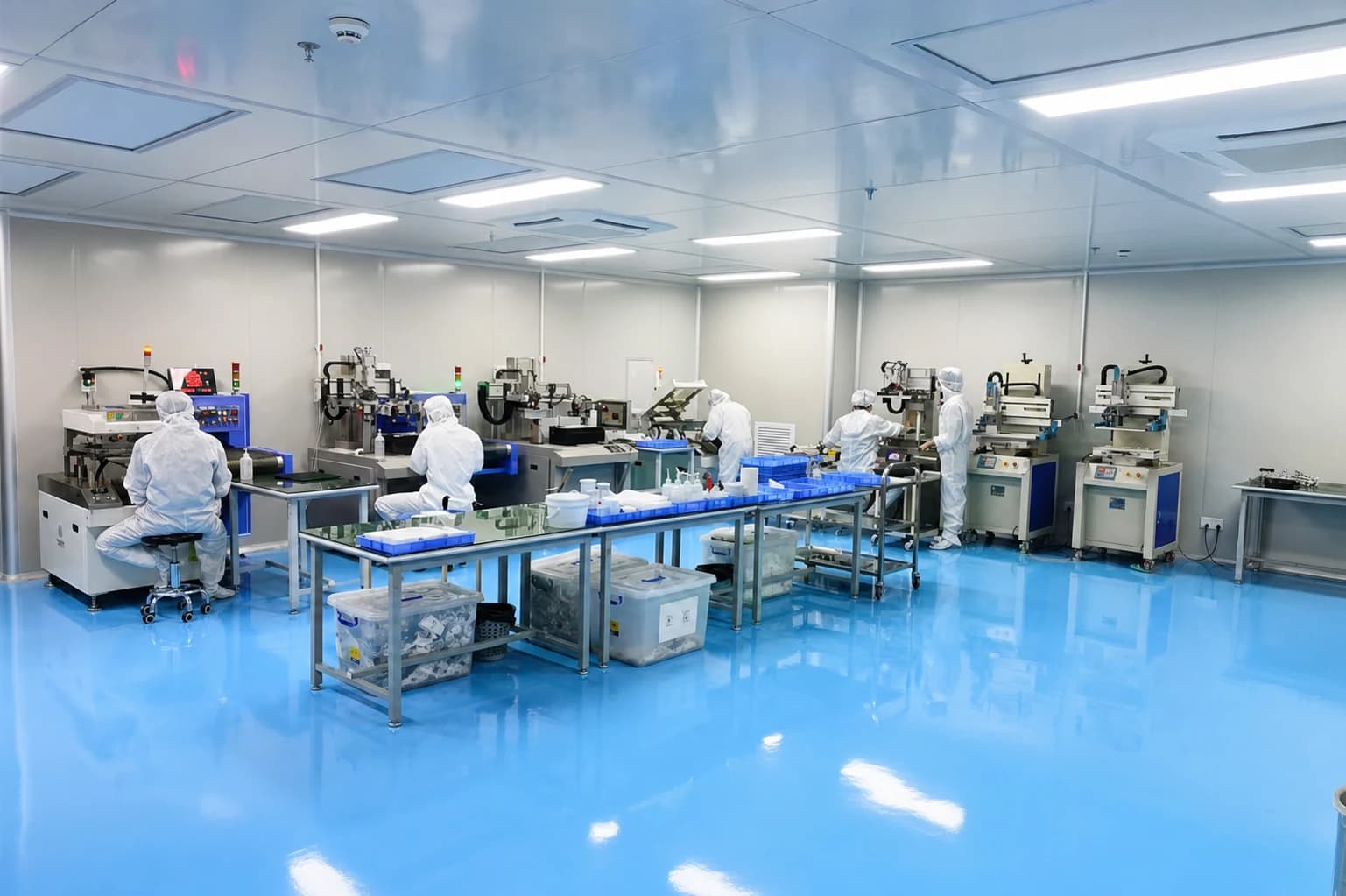
A photograph can establish context; it cannot by itself establish range, calibration, process ownership, or acceptance capability.
| Buyer question | Useful evidence | What must not be inferred |
|---|---|---|
| Is this route controlled? | Approved flow, traveler fields, revision and responsibility map | A generic process diagram is not a control record |
| Can this feature be inspected? | Named method, equipment context, datum, sampling, record | Equipment presence is not an approved tolerance |
| Is an external step used? | Partner scope, incoming/outgoing criteria, responsibility boundary | Do not describe a partner process as owned equipment |
| Can the result be repeated? | Released inputs, measured outputs, exceptions, lot linkage | One sample or photograph is not repeat-production evidence |
Start the review with the difficult inputs
- Released or marked-up drawing, artwork, schematic, and assembly interface
- Electrical target: value, curve, voltage, current, power, tolerance, TCR, or isolation
- Thermal and mechanical boundary: temperatures, heat path, mounting, pressure, outline, flatness
- Environment: humidity, fuel, oil, chemicals, cleaning, vibration, wear, or cycling
- Prototype and annual volume, acceptance method, report and traceability needs