
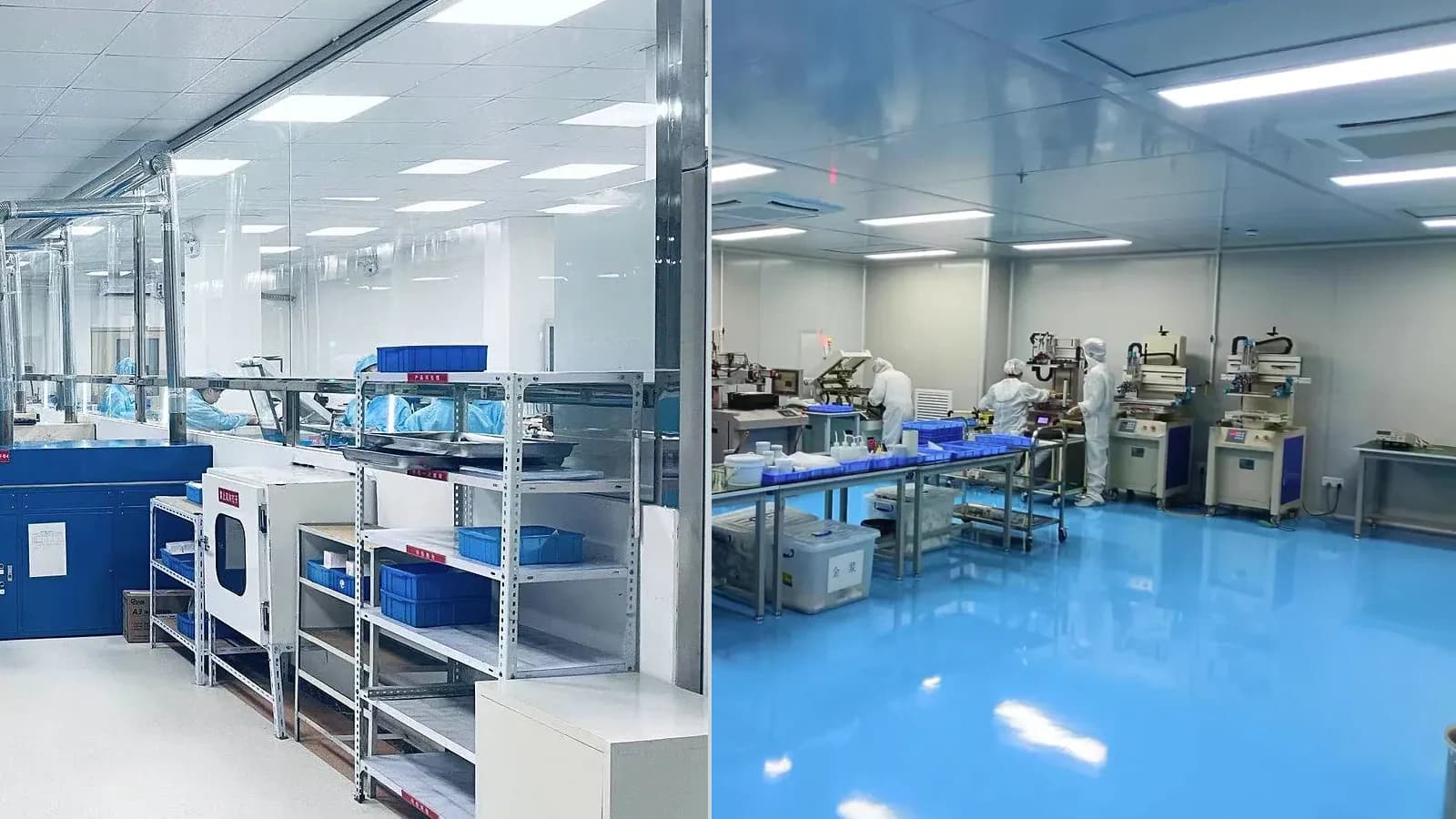
Overview
This governance and evidence record defines the scope and buyer use of Factory and Process Equipment. It distinguishes source-qualified company evidence from representative context, private records, expired documents, and claims still requiring approval.
Engineering review matrix
Each row links a design variable to evidence that can support a drawing or release decision.
| Variable | Control question | Verification route |
|---|---|---|
| Functional requirement | For Factory and Process Equipment, state what the part or process must do and under which operating conditions. | Verify with a requirement-linked method and acceptance rule. |
| Construction route | Separate substrate, layers, joining, protection, and finishing into a compatible sequence. | Review the complete stack and process ownership. |
| Geometry and interfaces | Datums, tolerances, keep-outs, terminals, mounting, and inspection access must be explicit. | Inspect critical features while they remain controllable. |
| Environment and life | Temperature, humidity, media, load, vibration, cycling, storage, and service define validation. | Use representative exposure and measure response before and after. |
| Evidence and release | Claims require a qualified drawing, record, result, owner, revision, and disposition. | Release only current, traceable, permission-cleared evidence. |
Governance route
The order makes assumptions and ownership visible before a result is promoted to a requirement.
- 01
Identify the buyer decision
For Factory and Process Equipment, document the functional requirement, operating boundary, interfaces, quantities, and acceptance owner against the current drawing.
- 02
Select the controlling record
For Factory and Process Equipment, compare the applicable material and process routes, recording compatibility limits, trade-offs, and verification needs before selection.
- 03
Verify scope and validity
For Factory and Process Equipment, agree the inspection method, sample plan, acceptance criteria, traceability, and report format before validation.
- 04
Redact protected information
For Factory and Process Equipment, remove customer identity, confidential geometry, drawing data, lot codes, and other protected information while preserving technical traceability.
- 05
Release with ownership and revision
For Factory and Process Equipment, close remaining assumptions and link the quoted or released scope to the drawing revision, evidence set, owner, and change-control plan.
Failure controls
These are review prompts, not evidence that every risk applies or that every test is available.
- A
Ambiguous requirement converted into an unstated assumption
- B
Adjacent route presented as the selected construction
- C
Inspection unable to reproduce the drawing requirement
- D
Evidence used outside controlled scope
Inputs for a practical review
Unknown values may be labelled unknown. The review should convert uncertainty into an explicit decision or validation task.
Send Drawings- 01
Functional target and application conditions
- 02
Drawing, materials, construction, and interfaces
- 03
Critical values and tolerances
- 04
Environment, life, validation, and failure criteria
- 05
Quantity, documents, traceability, and packaging