
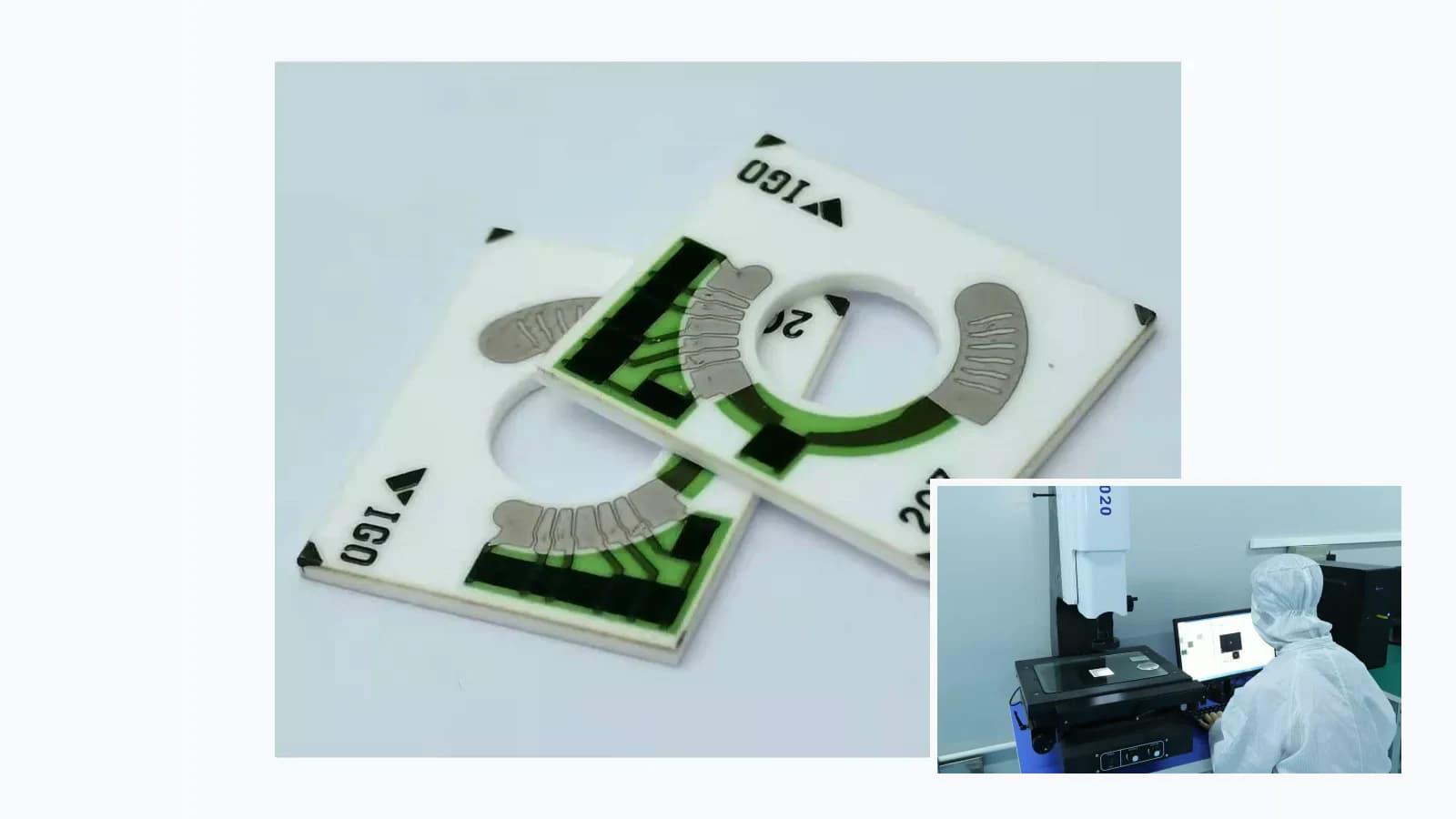
Overview
This engineering review example defines the evidence structure for Motorcycle Fuel-Gauge Resistor Card Engineering Review. No customer, result, performance improvement, yield, schedule, or volume is asserted because a traceable and publication-cleared project record has not been supplied.
Evidence release route
The order makes assumptions and ownership visible before a result is promoted to a requirement.
- 01
Confirm publication permission
For Motorcycle Fuel-Gauge Resistor Card Engineering Review, verify written publication permission, permitted evidence, redaction scope, and the named approver before external use.
- 02
Redact customer identity and drawings
For Motorcycle Fuel-Gauge Resistor Card Engineering Review, remove customer identity, confidential geometry, drawing data, lot codes, and other protected information while preserving technical traceability.
- 03
Verify input and process records
For Motorcycle Fuel-Gauge Resistor Card Engineering Review, agree the inspection method, sample plan, acceptance criteria, traceability, and report format before validation.
- 04
Verify measured outcome
For Motorcycle Fuel-Gauge Resistor Card Engineering Review, agree the inspection method, sample plan, acceptance criteria, traceability, and report format before validation.
- 05
Approve the bounded case narrative
For Motorcycle Fuel-Gauge Resistor Card Engineering Review, close remaining assumptions and link the quoted or released scope to the drawing revision, evidence set, owner, and change-control plan.
Engineering review matrix
Each row links a design variable to evidence that can support a drawing or release decision.
| Variable | Control question | Verification route |
|---|---|---|
| Nominal function | For Motorcycle Fuel-Gauge Resistor Card Engineering Review, resistance, ratio, tolerance, TCR, voltage, power, pulse, and stability need a defined reference condition. | Measure value and ratio with stated probe geometry, temperature, dwell, and instrument conditions. |
| Geometry and sheet resistance | Paste sheet resistance and effective length-to-width set first-order value; corners and terminations disturb the ideal square model. | Correlate released artwork and processed-film measurements with actual resistance distribution. |
| Termination effects | Conductor overlap, current crowding, contact resistance, aspect ratio, and refire interactions can dominate short geometries. | Use Kelvin or controlled probing where termination resistance is material. |
| Loading and temperature | Power density, substrate spreading, terminal cooling, voltage coefficient, ambient, and duty determine self-heating and drift. | Verify resistance change and temperature field at the intended electrical and thermal boundary. |
| Trim and protection | Trim allowance, cut shape, measurement loop, stability margin, overglaze, and post-trim processing form one sequence. | Record pre-trim, target, post-trim, post-protection, and stability results against the released lot. |
Failure controls
These are review prompts, not evidence that every risk applies or that every test is available.
- A
Value offset from geometry, thickness, firing, or termination interaction
- B
Local overheating and irreversible drift under load
- C
Trim-cut stress, current crowding, or inadequate stability margin
- D
Noise, voltage-coefficient error, humidity drift, or ratio mismatch
Inputs for a practical review
Unknown values may be labelled unknown. The review should convert uncertainty into an explicit decision or validation task.
Send Drawings- 01
Nominal resistance or ratio and complete tolerance budget
- 02
TCR, voltage, power, pulse, duty, and temperature range
- 03
Artwork, resistor dimensions, terminals, and trim keep-outs
- 04
Probe method, reference temperature, and acceptance method
- 05
Protection, environment, stability, and reliability profile