
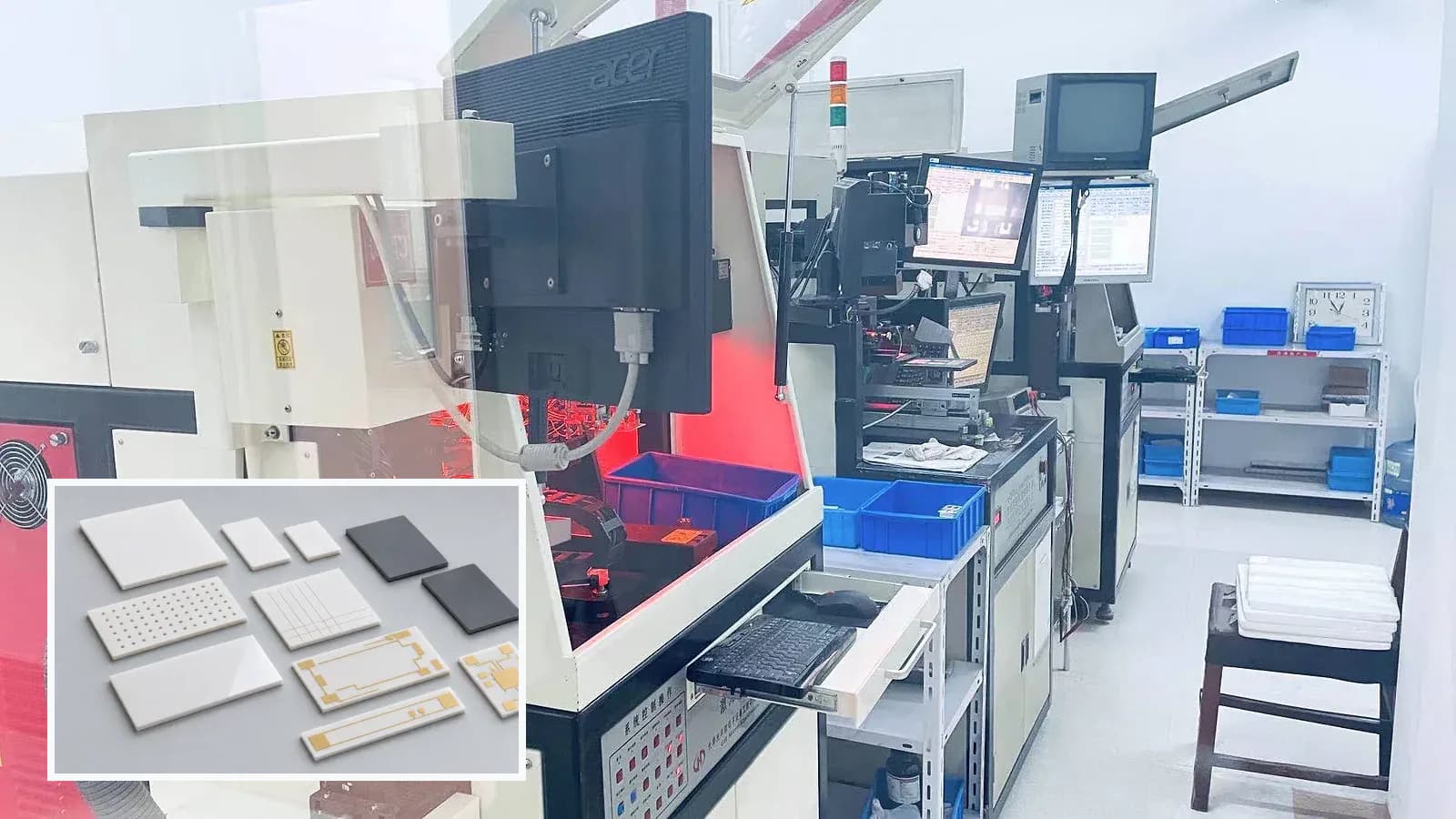
Overview
This process control record treats Ceramic Laser Drilling, Cutting, and Scribing as a controlled release sequence rather than a machine-list claim. It connects incoming inputs, process variables, inspection points, exceptions, and traceability to the failure each control prevents.
Control sequence
The order makes assumptions and ownership visible before a result is promoted to a requirement.
- 01
Release the input revision
For Ceramic Laser Drilling, Cutting, and Scribing, close remaining assumptions and link the quoted or released scope to the drawing revision, evidence set, owner, and change-control plan.
- 02
Confirm materials and tooling
For Ceramic Laser Drilling, Cutting, and Scribing, document the functional requirement, operating boundary, interfaces, quantities, and acceptance owner against the current drawing.
- 03
Control the process window
For Ceramic Laser Drilling, Cutting, and Scribing, complete control the process window against the controlled drawing, named assumptions, responsible owner, required evidence, and release decision.
- 04
Measure the critical output
For Ceramic Laser Drilling, Cutting, and Scribing, agree the inspection method, sample plan, acceptance criteria, traceability, and report format before validation.
- 05
Record exceptions and disposition
For Ceramic Laser Drilling, Cutting, and Scribing, complete record exceptions and disposition against the controlled drawing, named assumptions, responsible owner, required evidence, and release decision.
Engineering review matrix
Each row links a design variable to evidence that can support a drawing or release decision.
| Variable | Control question | Verification route |
|---|---|---|
| Material identity | For Ceramic Laser Drilling, Cutting, and Scribing, ceramic chemistry, grade, source data, lot, thickness, surface, and thermal/mechanical properties must match the actual route. | Review source documentation and incoming measurements within stated scope. |
| Mechanical geometry | Outline, thickness, flatness, bow, holes, slots, edge, datum, scribe, and break direction affect printing and assembly. | Measure with a drawing-linked datum and brittle-part method. |
| Surface condition | Roughness, cleanliness, porosity, lapping, polishing, and handling influence print definition, adhesion, deposition, and bonding. | Inspect the controlled surface before metallization or printing. |
| Thermal interface | Conductivity values belong to a named grade and temperature; assembly interfaces and geometry control real heat flow. | Use source data for selection and assembly-level thermal validation for release. |
| Metallization compatibility | Paste, deposited metal, adhesion layer, firing, plating, soldering, and wire bonding need route-specific compatibility. | Qualify the complete material and assembly stack rather than the bare substrate alone. |
Failure controls
These are review prompts, not evidence that every risk applies or that every test is available.
- A
Cracking or chipping from machining, handling, mounting, or thermal stress
- B
Registration or bonding loss from surface, flatness, or cleanliness variation
- C
Thermal performance assumed from generic values rather than actual grade and assembly
- D
Metallization adhesion or interface failure after processing and exposure
Inputs for a practical review
Unknown values may be labelled unknown. The review should convert uncertainty into an explicit decision or validation task.
Send Drawings- 01
Ceramic family, grade, source document, and lot requirement
- 02
Outline, thickness, flatness, holes, slots, scribe, and edge tolerances
- 03
Surface finish, cleanliness, lapping/polishing, and protected faces
- 04
Metallization/printing, joining, mounting, and heat-path requirements
- 05
Incoming, dimensional, adhesion, thermal, and reliability evidence