
On this page
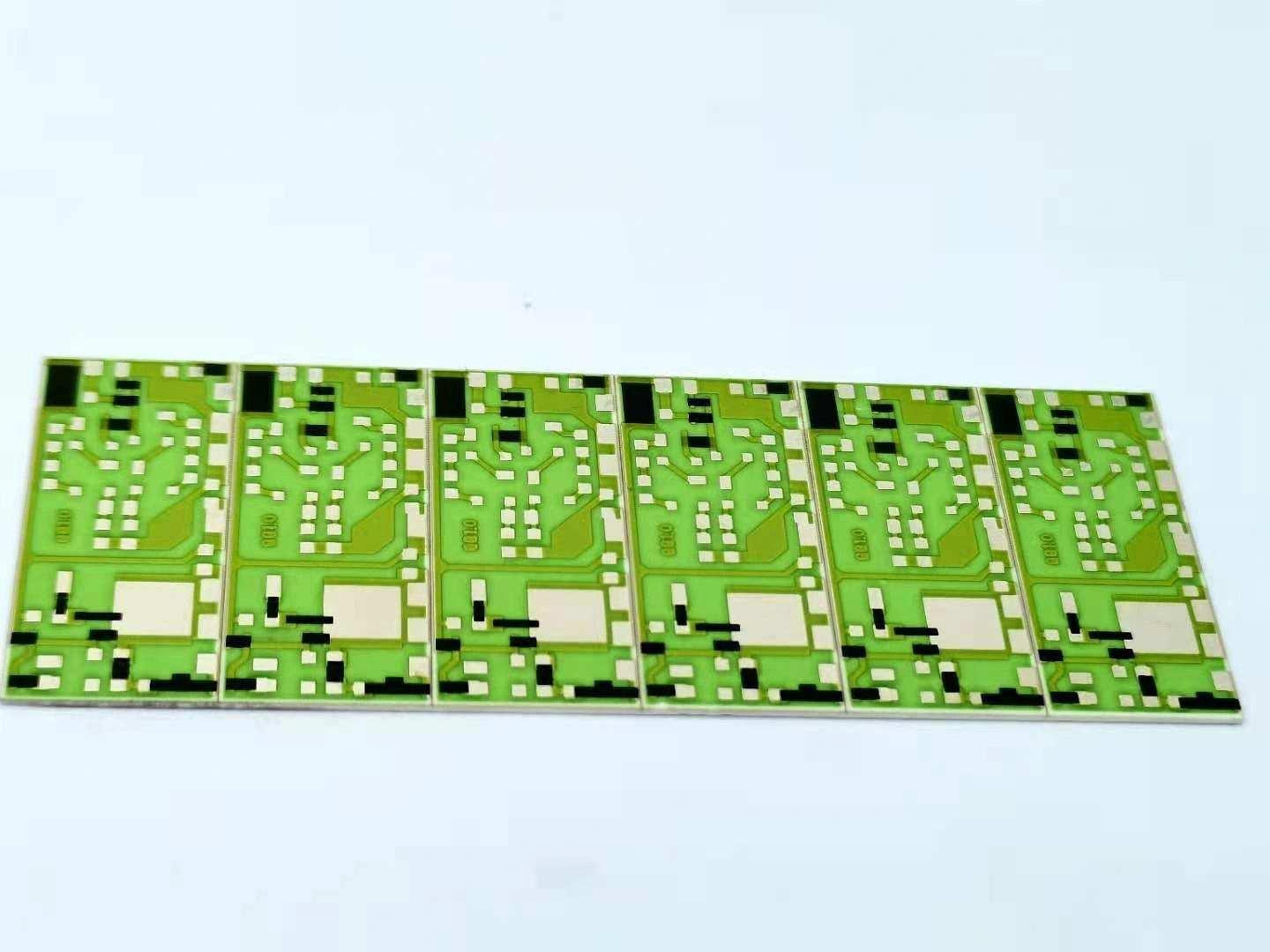
Solderability testing changes the surface it examines. Applying flux, molten solder or a preparation treatment to a functional ceramic termination can consume part of its permitted assembly history and make the tested product different from an untouched delivery part. Witness coupons offer a way to preserve product pads, but only when their relationship to those pads is established. The central decision is not whether the coupon wets well. It is whether its materials, processing, location and storage make that result useful for the specific product population being accepted.
Key design decisions
- Identify the surface condition the witness must represent, including every operation after conductor firing.
- Establish coupon-to-product agreement before using coupon results for product disposition.
- Allocate separate specimens to mutually destructive examinations.
- Keep solderability acceptance separate from joint geometry, assembly performance and service durability.
1. Define the decision before choosing a spare pad
Write the question as a surface requirement at a particular handoff: for example, whether identified fired terminations retain the agreed wetting response after a specified storage arrangement. A question about how a terminal joint survives thermal cycling needs an assembled specimen instead. A simple exposed pad cannot replace the lead, fillet and mechanical constraints of that joint.
The selected solderability method determines specimen geometry, preparation and evaluation. Establish its applicability to the ceramic and fired-metal system explicitly. Printed-board procedures can provide useful test concepts, but their finish categories and acceptance rules must not be transferred automatically to a different metallization. Agree the actual method and criteria before fabricating a coupon merely because it fits an available holder.
2. Match the complete surface history
A witness should follow the relevant substrate, paste, print, drying, firing and subsequent finish operations of the product. Match the sequence, not just the names of the ingredients. A freshly fired witness is a poor surrogate for a production pad that has passed through additional firings, cleaning, protective-glass printing or extended storage.
Map the exposed region on the coupon to the usable termination on the product. If the product pad is partly bounded by overglaze, a large unbounded metal rectangle does not reproduce every feature of that interface. Decide which differences are acceptable for the surface test and which require a representative product sample. Record the coupon drawing revision and the process stages it actually shares with the product.
3. Demonstrate positional representation
A convenient witness at one panel corner represents that location directly. It does not automatically describe the center, opposite corner or another furnace lane. Start with a process map that identifies the positions likely to differ for the surface characteristic under review. Printing direction, shielding during a later operation and handling access are examples of variables that can separate locations.
During initial correlation work, pair witness observations with sacrificed product pads at identified positions. Keep the pairing visible rather than pooling all coupon results against all product results. If only edge locations agree, the evidence bridge remains limited to those locations. Adding more edge witnesses improves information about the edge; it does not establish center equivalence.
4. Evaluate agreement rather than attractive correlation
Use the same measured quantity and classification procedure on both members of each pair. If the output is uncovered-area percentage, compare percentage-point differences, not a percentage increase calculated from a near-zero denominator. Strong correlation alone is insufficient: a coupon can track changes perfectly while consistently understating the product's uncovered area.
For an illustrative planning rule, suppose the permitted absolute coupon-to-product difference is at most two percentage points for each examined pair. Three product-minus-coupon differences are 1.0, 1.5 and 3.0 percentage points. Their average is about 1.83, but the largest difference is 3.0, so this set does not satisfy the chosen pairwise rule. The rule is an assumed example, not a general solderability acceptance limit. Uncertainty in classifying the wetting boundary also belongs in the agreement decision.
d_i = q_product,i − q_witness,i; D_max = max(|d_i|)
- q: the same measured surface characteristic for a matched specimen pair
- d_i: signed difference for pair i, in the units of q
- D_max: largest observed absolute difference in the examined pairs
Paired specimens share the defined process and storage history. This descriptive calculation does not provide a statistical guarantee for unexamined parts or establish the acceptable difference.
5. Allocate witnesses by test branch
Once a witness has been cleaned, aged, soldered or sectioned, its state has changed. Reusing it in another branch can answer a sequential-exposure question, but cannot recreate an independent untouched control. List each irreversible operation and reserve separate witnesses where the comparisons require separate starting conditions.
Consider four identified panels, three sampled locations per panel and two witnesses per location. The layout contains 24 witnesses. Assigning one from each location to an immediate test and the other to a defined storage exposure gives 12 witnesses per branch. It still represents only four panels, not 24 independent production lots. If destructive sectioning must occur before solder exposure on a separate baseline specimen, additional allocation is needed.
| Required evidence | Suitable allocation | State not preserved after the test |
|---|---|---|
| As-processed surface before preparation | Untouched identified witness or sacrificed product pad | Original chemistry if subsequently cleaned |
| Immediate solderability response | Dedicated witness from the matched location | Unused pad surface after solder contact |
| Solderability after storage | Separate witness stored with the relevant population | Unaged baseline |
| Remaining metallization after solder exposure | Previously soldered specimen selected for sectioning | Intact specimen for later mechanical testing |
| Completed joint durability | Representative assembled terminal and ceramic | Bare-surface-only comparison |
6. Prevent the witness from receiving better protection
Coupon traceability has to continue after separation from the panel. If production parts are repeatedly opened for inspection while their witnesses remain in a sealed container, the two histories diverge. Likewise, a laboratory witness handled only with clean tools may not reproduce a contact exposure that is part of the actual transfer arrangement.
Define where the witnesses travel, which container they occupy, when protection is removed and what event ends their representative history. Do not intentionally contaminate product to match an abused witness. Correct the process or establish a controlled comparison with separate specimens. A lost label, unidentified cleaning step or undocumented storage interval breaks the claimed link even when the final wetting appearance is excellent.
7. Define what a failed or missing witness triggers
Before testing begins, identify the product population associated with each witness and the action required for a failed, damaged or missing result. A missing witness is missing information, not a passing observation. A witness broken during separation may be unusable without demonstrating that the product surface itself is defective.
If a witness fails while paired product samples pass, investigate the transfer relationship as well as the process. If the witness passes while a product pad fails, do not dismiss the product result because the witness was intended to stand in for it. Revisit geometry, position and post-process handling to find the divergence. Any retest should have a stated purpose and selection rule rather than repeatedly searching for an acceptable-looking specimen.
8. Maintain the bridge when the process changes
A coupon-to-product comparison applies to the evaluated construction and history. Changes in conductor system, overglaze opening, panel arrangement, surface preparation or storage can change the relationship. Identify which changes require a fresh paired comparison and which can be reviewed through the existing evidence. Preserve the reason for that distinction.
The final test plan should connect each result to a coupon identity, position, product population, method, surface state and acceptance decision. Keep the untouched-product requirement explicit in the delivery definition. A useful witness system reduces unnecessary destruction while retaining the ability to challenge its own representativeness; it does not replace all product examination with a more convenient sample.
Plan representative solderability witnesses
Provide the pad construction and intended acceptance handoff so specimen allocation can be defined before panel or screen release.
- Product and proposed witness drawings, including exposed pad and overglaze boundaries
- Shared and divergent process steps, panel positions and furnace routing
- Conductor, optional finish, solder and selected solderability method
- Storage and handling arrangement up to the acceptance handoff
- Planned paired comparison, uncertainty and agreement rule
- Available sacrificial parts, witness quantities and separate destructive test branches
The drawing-upload form loads as you reach this section.