
Overview
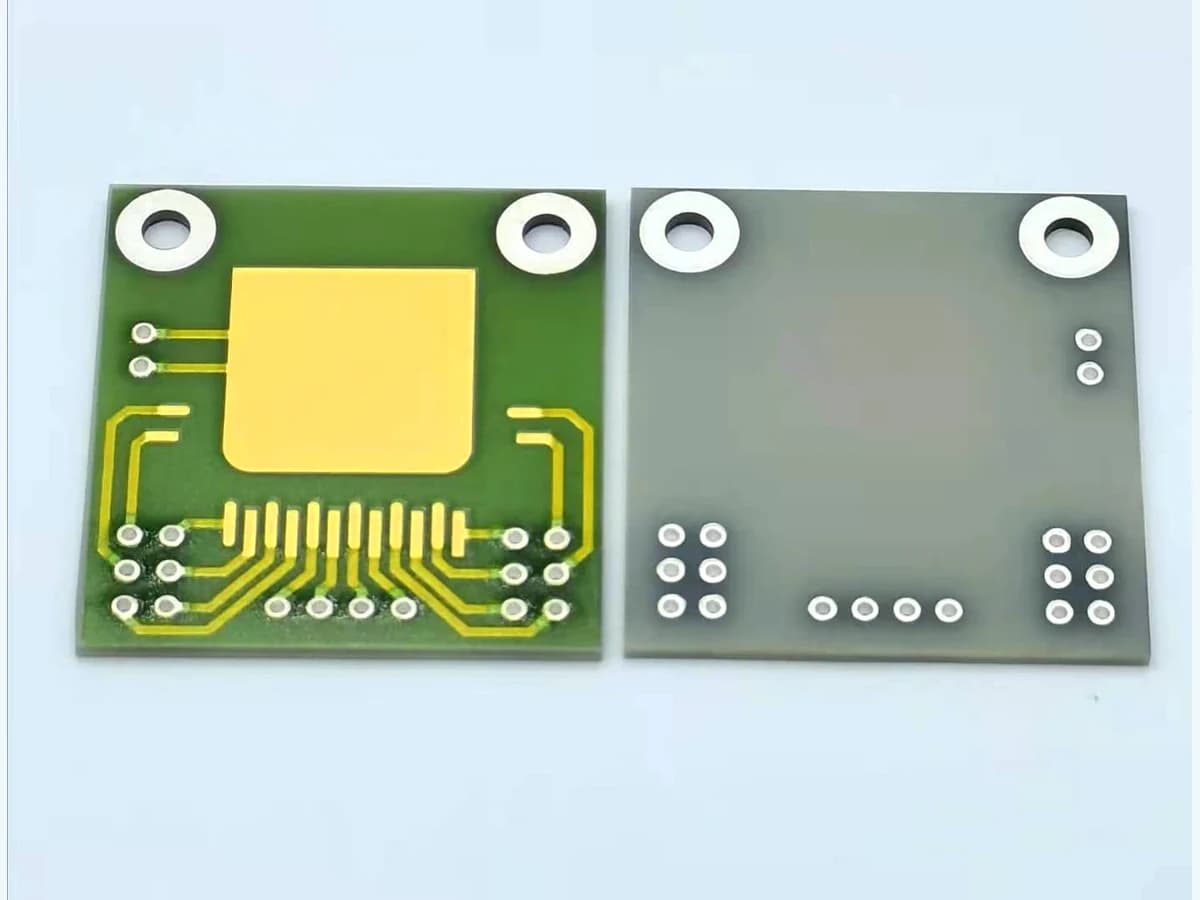
Preparing aluminum nitride for a printed thick-film stack is a controlled interface decision, not a generic wipe-and-print instruction. The exact AlN grade, densification and additive system, surface finish, flatness, porosity, machining, edge condition, storage, packaging, moisture and chemical exposure, and functional face all affect what arrives at printing. The selected conductor, resistor, dielectric, protection, and joining system must then be reviewed against that substrate and its supplier guidance. A cleaning route that removes one contaminant can introduce residue, moisture, particles, surface change, or handling delay; aggressive finishing can alter texture, flatness, exposed microstructure, edge strength, and print support. High thermal conductivity also changes the thermal boundary during later application testing, but it does not prove a printing or adhesion advantage. This guide organizes surface preparation around observable incoming condition, controlled media, time-to-print, production-intent coupons, named process history, and failure analysis. It does not claim an AlN grade, cleaning chemistry, roughness, adhesion, conductor, firing profile, thermal conductivity, dielectric strength, feature size, or reliability capability for ThickFilmPCB.
Failure controls
These are review prompts, not evidence that every risk applies or that every test is available.
- A
Treating all AlN grades and supplier surface states as interchangeable because their bulk material name is the same
- B
Applying water, solvent, plasma, bake, abrasion, or polishing without supplier compatibility, controlled parameters, untreated controls, or measurable acceptance
- C
Using bulk thermal conductivity or electrical insulation data as evidence of printable surface quality or paste adhesion
- D
Losing functional-face identity or contaminating the prepared face through fixtures, packaging, gloves, queue time, or rework
- E
Qualifying the first print while refires, trim, protection, soldering, bonding, cleaning, assembly heat, and environmental exposure remain absent
- F
Publishing a preparation recipe, adhesion value, firing window, feature limit, or AlN performance without controlled company evidence and review
Controlled model
AlN surface-state and process-window model
Describe the interface with a vector of measured surface and process variables instead of one roughness or cleanliness label. Compare incoming, prepared, time-aged, printed, fired, and conditioned witness states so that a preparation effect can be separated from paste, geometry, profile, or assembly variation.
Ra = (1/L) ∫₀ᴸ |z(x)| dxArithmetic mean surface-profile deviation for a stated evaluation length and filter.
- Units
- Ra and z in µm; L in mm or µm
- Use boundary
- Ra does not capture waviness, isolated pores, chemistry, grain exposure, particles, anisotropy, or adhesion. Method, direction, cutoff, and instrument must accompany the value.
Δε_th ≈ (α_layer − α_AlN) ΔTFirst-order free thermal-strain mismatch between a printed layer and the AlN substrate.
- Units
- Dimensionless strain; α in 1/K; ΔT in K
- Use boundary
- A screening term only. Stress and failure depend on layer evolution, modulus, thickness, geometry, interfaces, creep, cracking, firing and cooling profile, and refires.
θ_AlN = t/(kA)First-pass through-thickness thermal resistance of a uniform AlN section.
- Units
- θ in K/W; t in m; k in W/(m·K); A in m²
- Use boundary
- Does not describe surface cleanliness or print compatibility. Supplier k values are grade- and method-specific, while contacts and spreading can dominate the finished assembly.
ΔR/R₀ = (R_stage − R₀)/R₀Normalized electrical change of a witness feature after preparation aging, firing, refire, assembly, or conditioning.
- Units
- Dimensionless, commonly % or ppm
- Use boundary
- State the feature, test current, temperature, contact method, elapsed time, conditioning, and uncertainty. Resistance cannot identify an interface failure alone.
Decision comparison
| Decision | Route A | Route B | Verification |
|---|---|---|---|
| As-received versus additional preparation | An as-received supplier surface may preserve qualified finish and packaging, while still requiring incoming checks, controlled unpacking, and time-to-print limits. | Additional cleaning, plasma, bake, abrasion, lapping, or another treatment may remove a known condition but can also change texture, residues, moisture state, edges, particles, and compatibility. | Use paired traceable coupons and blanks; measure surface state, print transfer, fired interface, electrical response, and failure mode before adding any treatment to the traveler. |
| Water-based versus nonaqueous preparation | A water-based route requires verified compatibility with the exact AlN grade, controlled water quality, chemistry, exposure, rinse, drying, residue, and delay. | A solvent or other nonaqueous route requires verified solvency, residue, safety, ventilation, material compatibility, drying, and contamination controls. | Follow substrate and chemical supplier guidance and compare controlled witnesses; do not infer that either family is universally safe for AlN. |
| Smooth print surface versus assembly robustness | A smoother face may support fine printed edges and metrology but can be associated with a distinct finishing history and interface response. | A less-finished surface may preserve native substrate state but can increase thickness variation, local print discontinuity, and inspection complexity. | Select the finish against the printed feature, interface qualification, mechanical drawing, and assembly—not from a material-property table alone. |
- Do not assume an AlN preparation used for thin-film deposition, brazing, plating, adhesive bonding, or bare ceramic service is suitable for a particular thick-film paste stack.
- The functional face, front/back identity, edge and hole condition, and time between preparation and printing should remain traceable through fixtures and travelers.
AlN surface-preparation qualification sequence
The order makes assumptions and ownership visible before a result is promoted to a requirement.
- 01
Identify the AlN substrate
Lock manufacturer, grade, lot, additive or composition evidence where provided, forming route, thickness, flatness, surface designation, roughness method, functional faces, machining, edges, holes, packaging, storage, and supplier change controls.
- 02
Define the contamination problem
State what preparation must remove or stabilize: particles, handling residue, machining debris, organic film, moisture state, or another verified condition. Do not introduce an aggressive process when no measurable problem and no compatible method have been established.
- 03
Select bounded preparation candidates
Document chemistry, purity, concentration, temperature, time, agitation, spray or immersion, plasma or bake parameters, fixtures, rinse, drying, atmosphere, safety, waste, maximum queue time, re-clean rule, and supplier restrictions for each branch.
- 04
Measure before printing
Use agreed texture, flatness, visual, particle, residue, wetting, contact-angle, mass, spectroscopy, or other relevant methods without pretending one indicator proves chemical cleanliness or adhesion. Preserve untreated controls and raw observations.
- 05
Print the named stack
Run production-intent conductor, resistor, dielectric, and protection coupons with controlled paste conditioning, screen, print direction, leveling, dry, furnace atmosphere and profile, cooling, refires, trim, and later assembly exposures.
- 06
Classify interface response
Measure printed geometry, fired thickness, visual defects, resistance, isolation where relevant, adhesion or joint response, and failure plane. Compare lots and preparation branches with uncertainty, individual results, microscopy, and fixture limitations visible.
- 07
Release and monitor
Tie the accepted preparation, surface state, material stack, process traveler, inspection, test method, sampling, and evidence record to the drawing. Reopen review for substrate, finish, packaging, chemistry, equipment, queue time, paste, profile, or assembly changes.
Engineering review matrix
Each row links a design variable to evidence that can support a drawing or release decision.
| Variable | Control question | Verification route |
|---|---|---|
| AlN grade and provenance | Record supplier, designation, lot, composition evidence, forming and densification route, thickness, functional faces, and change notices. | Review controlled supplier documents, receiving identity, lot records, dimensions, appearance, and agreed material checks. |
| Surface finish and geometry | Specify as-fired, lapped, ground, polished, or another state; roughness method, direction, flatness, bow, pores, machining, edges, and holes. | Use calibrated surface and dimensional measurements with sampling map, uncertainty, and face identity preserved. |
| Preparation media and exposure | Define chemical identity, concentration, purity, water or solvent quality, temperature, time, agitation, plasma, bake, fixture, rinse, dry, and safety boundary. | Audit solution and equipment records and compare treated witnesses with an as-received control. |
| Handling and queue time | Control gloves, tools, carriers, front/back contact, packaging, environment, storage, maximum delay to print, re-clean, and rejection rules. | Use traveler timestamps, witness checks, packaging inspection, and controlled exposure studies when delay is material. |
| Printed material stack | Name conductor, resistor, dielectric, overglaze or overcoat, thinner, overlaps, sequence, supplier compatibility statements, and prohibited substitutions. | Qualify the complete stack on the selected AlN preparation using current technical data and production-intent coupons. |
| Thermal process history | Record drying, burn-out, atmosphere, peak, time at peak, total profile, cooling, furnace loading, refires, and later assembly heat. | Retain traceable profiles and correlate witness geometry, resistance, appearance, interface tests, and post-refire change. |
| Interface and electrical acceptance | Define adhesion fixture, failure categories, resistance, TCR if needed, isolation, leakage, solder or bond interface, visual limits, conditioning, and acceptance rule. | Test with calibrated methods, report individual and censored results, and preserve failure-plane evidence and uncertainty. |
| Environment and change control | Specify humidity, condensation, fluids, cleaning, corrosion, thermal cycling, mechanical loads, coating, storage, and every input that triggers requalification. | Condition complete samples and use a revision-linked change matrix with assigned review before substitution. |
Reference boundary
Public method sources
These sources support the engineering method and terminology used in this technical guide. They do not establish a ThickFilmPCB material list, capability limit, customer result, certification, or finished-product specification.
- 01CeramTec — Aluminum Nitride Substrates
Supports that AlN substrate surface roughness, geometry, thermal, mechanical, and electrical properties are tied to a named supplier material and stated methods; these values do not define a preparation or paste compatibility.
- 02MARUWA — Aluminum Nitride Substrates
Supports treating surface roughness and bulk properties as supplier- and product-specific selection data; it provides no ThickFilmPCB cleaning, firing, adhesion, or qualification result.
- 03KYOCERA — Aluminum Nitride packages and substrates
Supports grade-dependent AlN material, surface-processing, thermal, electrical, and structural considerations, while explicitly presenting values as typical and configuration-dependent; it does not approve a thick-film stack.
- 04Surface Preparation of Aluminum Nitride for Metallization — experimental study
Provides direct experimental evidence that AlN surface response depends on the tested cleaning medium, pH, original surface state, and exposure. The study does not define a universal production-cleaning recipe or prove post-fire adhesion for another material stack.
- 05Interfacial adhesion and microstructure of thick-film metallized AlN — experimental study
Provides direct study evidence that AlN surface state, thick-film composition, interface microstructure, and measured failure response must be evaluated together. Its materials, pretreatment, 850°C firing process, and pull-test results are study-specific and do not establish an operating temperature or ThickFilmPCB capability.
Inputs for a practical review
Unknown values may be labelled unknown. The review should convert uncertainty into an explicit decision or validation task.
Send Drawings- 01
AlN supplier, exact grade, lot requirements, material documents, thickness, flatness, surface finish, roughness method, functional faces, machining, edges, and packaging
- 02
Current surface condition, suspected contaminants, prior cleaning or exposure, storage, time limits, acceptable preparation media, and prohibited chemistry
- 03
Complete conductor, resistor, dielectric, protection, terminal, joining, coating, and adhesive stack with supplier codes and allowed substitutions
- 04
Printed geometry, registration, thickness, electrical function, resistance, isolation, adhesion, solder or wire-bond interface, visual and inspection criteria
- 05
Printing, drying, firing or cure, atmosphere, refires, trim, cleaning, joining, assembly heat, rework, and furnace or oven profile requirements
- 06
Operating and storage temperature, humidity, condensation, fluids, chemicals, corrosion, mechanical load, vibration, shock, and cleaning exposure
- 07
Prototype matrix, untreated controls, sampling, surface and interface methods, uncertainty, acceptance rules, traceability, reports, and change triggers