
Overview
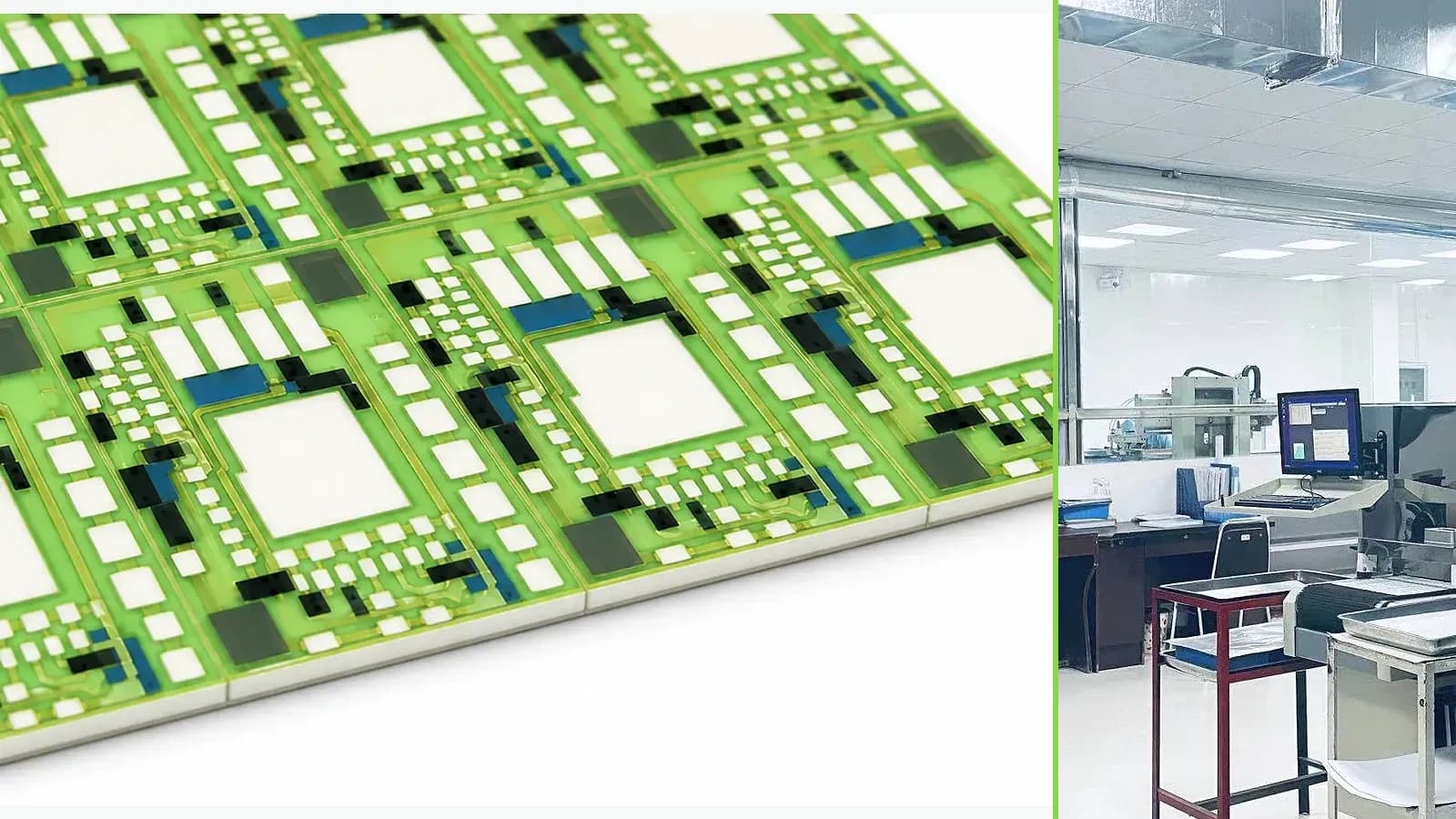
Platinum, gold, and supplier-defined gold/platinum thick-film compositions are not a single interchangeable paste family. Their useful differences can involve fired-film resistivity, temperature coefficient, oxidation and corrosion response, glass or oxide content, ceramic interaction, print and firing route, refire sensitivity, wire-bond or solder interface, contact metallurgy, thermoelectric effects, trim behavior, and long-duration stability. The words platinum-gold may describe an alloy, a composite composition, a multilayer termination strategy, or merely two candidate metals; the exact supplier product and technical data sheet must settle that ambiguity. Elevated-temperature duty also cannot be inferred from a noble-metal name or from a supplier firing peak. A documented 850°C value in a named paste sheet is a short process-firing condition for that material system, not the continuous or cyclic operating temperature of a finished circuit. Application screening must define the actual conductor temperature, atmosphere, contaminants, electrical load, time, ramps, gradients, substrate, companion layers, protective materials, joins, and measurement stability. This page provides a controlled selection and qualification method. It does not claim a ThickFilmPCB platinum-gold process, operating-temperature limit, lifetime, resistance, bondability, solderability, or material approval, and the assigned photograph cannot identify its metallurgy.
Engineering review matrix
Each row links a design variable to evidence that can support a drawing or release decision.
| Variable | Control question | Verification route |
|---|---|---|
| Metallurgy identity | Specify product code, supplier, revision, intended function, precious-metal composition information available for review, vehicle and glass system where disclosed, restricted substances, lot and approved alternatives. | Use current supplier TDS and declaration documents plus receiving identity and lot records; never identify metallurgy by film color or filename. |
| Temperature-time map | Separate firing, assembly, operating, fault, storage and test temperatures by location, with ramps, dwell, cycles, gradients, recovery and cumulative exposure. | Review instrumented thermal mapping or a correlated model at the conductor, overlaps, pads, substrate and joining interfaces under worst credible simultaneous loads. |
| Atmosphere and contamination | Define air, inert or other gas, oxygen activity, humidity, pressure, reactive species, deposits, oils, flux, cleaning residues, handling, packaging and whether the film is exposed or protected. | Use mission-representative chambers or controlled gas systems, witness coupons, blanks, post-exposure inspection and agreed surface or chemical analysis where required. |
| Substrate and companion layers | Name ceramic composition, supplier grade, finish, cleanliness, thickness, flatness, conductor underlayers or overlaps, resistors, dielectrics, glazes, coatings and every associated firing or cure. | Qualify the complete supplier-authorized stack on production-intent ceramic lots; document interlayer sequence and interface observations. |
| Printed geometry | Set artwork width and length, square count, bends, necks, gaps, pad and overlap dimensions, edge distance, target fired thickness, tolerance, screen and inspection datum. | Measure representative fired features and thickness, calculate expected paths from actual geometry, and compare with four-wire or otherwise suitable resistance data. |
| Electrical loading | Specify measuring and operating current, RMS, peak, pulse, duty, polarity, frequency, allowable voltage drop, power density, self-heating, insulation interaction, signal level and allowable noise or thermoelectric error. | Measure under the defined waveform and temperatures with calibrated instruments, thermal mapping, stable fixtures and uncertainty appropriate to the resistance. |
| Joining and termination | Define wire or ribbon material and process, solder or braze alloy, pad structure, contact force, connector, weld, attach, cleaning, rework, stage temperature and later thermal exposures. | Run interface-specific pull, shear, contact-resistance, cross-section, microscopy or other agreed tests initially and after conditioning, with failure-mode classification. |
| Stability and evidence | Set reversible TCR, irreversible drift, adhesion, contact, visual and microstructural acceptance; sample count, controls, reference state, uncertainty, duration, failure criteria, traceability, document retention and change triggers. | Use a preapproved test plan, raw-data review, instrument calibration, model correlation, post-test analysis and signed product-specific release decision. |
Controlled model
Conductor loss, temperature response, and drift model
Start with geometry and supplier-bounded material data, but close the decision with measurements on production-intent coupons and assemblies. Separate reversible temperature response from irreversible drift and from contact or measurement error.
R_path ≈ R_s(T) × L/W + ΣR_contactFirst-order path resistance from sheet resistance, square count, and discrete contact or transition resistances.
- Units
- Ω; R_s in Ω/square
- Use boundary
- Valid only for approximately uniform film thickness and current distribution. Corners, neck-downs, overlap, porosity, refires, trim cuts, substrate interaction and terminal gradients require measured correction.
R(T) ≈ R_ref[1 + α(T − T_ref)]Linear screening model for reversible resistance change around a stated reference temperature using temperature coefficient α.
- Units
- Ω; α in 1/K or ppm/K
- Use boundary
- Use only over a validated interval and atmosphere. Supplier typical TCR, self-heating, nonlinear behavior, contact resistance and irreversible aging cannot be collapsed into one universal α.
P_path = I_rms²R_path; q'' ≈ P_path/A_activeElectrical loss and an average areal heat-generation screen for the conducting feature.
- Units
- W and W/m²
- Use boundary
- Average flux hides edge and neck hot spots, pulse peaks, nonuniform current, convection, radiation and thermal contact. Couple to the actual substrate and assembly thermal model.
D_R = [R_after(t,T,atmosphere) − R_initial at reference]/R_initialNormalized irreversible resistance change after a defined exposure, measured again at the same reference condition.
- Units
- Dimensionless, commonly % or ppm
- Use boundary
- State stabilization, recovery time, reference temperature, current, atmosphere, terminals, instrument and uncertainty. This metric does not identify the physical failure mechanism by itself.
Decision comparison
| Decision | Route A | Route B | Verification |
|---|---|---|---|
| Platinum composition versus gold composition | A named platinum paste may be offered for resistive electrodes, heaters or elevated-temperature sensor structures, but has its own resistivity, high TCR, alumina interaction, print and air-firing boundaries. | A named gold conductor may prioritize low resistance or wire-bond compatibility under its specified alumina, dielectric, firing and bond conditions; noble character alone does not establish long-duration hot operation. | Compare current TDS documents line by line, then measure geometry, resistance, TCR, drift, adhesion and the required join on the same authorized substrate and mission-derived exposures. |
| Gold/platinum composition versus layered interfaces | A supplier-labeled gold/platinum composition is one formulated material whose compatibility is limited to the named ceramic system, role and processing window in its data sheet. | Separate platinum functional tracks and gold interface pads create an overlap or transition whose interdiffusion, contact resistance, refire response and mechanical integrity require explicit design and testing. | Require exact chemistry and intended role, build controlled overlap matrices, cross-section interfaces, map resistance, and condition joined coupons before choosing either architecture. |
| Bare conductor versus protected assembly | An exposed noble-metal film avoids an unqualified cover layer but remains subject to deposits, humidity, reactive species, handling, contact and surface changes in the actual atmosphere. | A dielectric, glaze, coating or package may reduce selected exposure while adding thermal mismatch, permeation, cure or firing, outgassing, edge-seal and repair questions. | Test the complete protected and unprotected candidates in the specified gas, pressure, contaminants, bias, temperature profile and mechanical assembly; inspect edges and interfaces. |
| Supplier firing temperature versus operating temperature | The firing profile sinters or bonds a named wet paste during manufacture and may include a short peak such as 850°C in a supplier sheet. | Operating qualification addresses a finished stack under current, time, atmosphere, gradients, assembly constraint and repeated excursions, often with different mechanisms and acceptance criteria. | Record both profiles separately and never transfer the firing peak into the drawing's operating-temperature field; establish operation only from application-specific evidence. |
- Electrical measurements made hot can include lead, fixture, contact and thermoelectric voltages. Four-wire geometry, polarity reversal or other agreed methods may be needed, depending on resistance level and gradients.
- A composition compatible with alumina is not automatically compatible with AlN, an LTCC tape, a dielectric, a resistor family, a glaze, or a second metal. Supplier system boundaries remain decisive.
Platinum-gold conductor qualification workflow
The order makes assumptions and ownership visible before a result is promoted to a requirement.
- 01
Resolve the material name
Ask whether the request means platinum, gold, a particular platinum-gold or gold-platinum formulation, an alloy composition, a layered transition, or two functional zones. Capture supplier code, required composition disclosure, prohibited substances, drawing notation and substitution authority.
- 02
Define elevated-temperature duty
Map actual conductor, pad and interface temperatures; dwell, ramps, cycles, gradients, atmosphere, pressure, humidity, reactive species, deposits, cleaning, electrical load, self-heating, mechanical restraint, lifetime, storage and reference-measurement conditions.
- 03
Build the complete stack
Name substrate grade and surface, conductor and any resistor or dielectric, layer order, overlaps, pad finish, protection, terminal, wire, solder, braze, adhesive, component and package. Check every layer against current supplier compatibility documents.
- 04
Bound print and firing
Control paste storage and age, mixing, screen, emulsion, artwork compensation, print speed, leveling, drying, wet and fired thickness, furnace atmosphere, belt profile, peak, dwell, cooling, loading, refires, contamination, handling and traceable lots.
- 05
Design discriminating coupons
Include long and short lines, multiple widths, corners, necks, Kelvin structures, overlaps between candidate metals, joining pads, adhesion features, protected and exposed areas, unloaded controls and production-representative thermal mass and ceramic edges.
- 06
Measure interfaces and stability
Record geometry, sheet and path resistance, TCR over the approved interval, contact resistance, adhesion and failure plane, bond or solder response, microscopy and reference-state drift before and after assembly, electrical loading and mission-derived exposure.
- 07
Release and monitor one system
Approve exact materials, suppliers, lots, stack, profiles, geometry, joining, protection, acceptance methods, uncertainty, exposure limits and records. Reopen qualification for formulation, substrate, process, thickness, atmosphere, refire, interface or customer-duty changes.
Failure controls
These are review prompts, not evidence that every risk applies or that every test is available.
- A
Treating platinum-gold as a self-defining chemistry when it may denote an alloy, formulated composite, layer transition, or two unrelated candidates
- B
Converting an 850°C supplier firing-process peak into a continuous, cyclic, fault or storage operating-temperature claim
- C
Assuming noble-metal content guarantees resistance to the actual atmosphere, deposits, glass interaction, substrate, joining materials or electrical bias
- D
Using room-temperature sheet resistance alone while ignoring TCR, geometry, contacts, self-heating, thermoelectric error and irreversible drift
- E
Combining separately documented platinum and gold pastes without qualifying their overlap, refires, diffusion, contact resistance, adhesion and later assembly
- F
Applying an LTCC-specific gold/platinum TDS to an alumina or AlN post-fired construction, or applying an alumina result to another ceramic
- G
Publishing high-temperature, lifetime, bondability, composition or capability language before a named stack and application-specific evidence are approved
Reference boundary
Public method sources
These sources support the engineering method and terminology used in this technical guide. They do not establish a ThickFilmPCB material list, capability limit, customer result, certification, or finished-product specification.
- 01DuPont 9141 platinum conductor technical data sheet
Provides supplier-specific platinum-paste description, alumina, print, air-firing and typical-property context, including its bounded elevated-temperature application wording; it does not establish a gold/platinum system or a finished-circuit operating limit.
- 02DuPont 5771 gold conductor technical data sheet
Provides supplier-specific gold-conductor processing, alumina basis, typical fired properties and wire-bond context. Its documented 850°C condition is a firing profile, not a product use temperature or ThickFilmPCB capability.
- 03DuPont LL509 co-fired solderable gold/platinum conductor technical data sheet
Confirms one named gold/platinum conductor is designed specifically for a named LTCC system and role, illustrating system dependence; it must not be transferred to post-fired alumina, AlN, or another paste stack without evidence.
Inputs for a practical review
Unknown values may be labelled unknown. The review should convert uncertainty into an explicit decision or validation task.
Send Drawings- 01
Meaning of platinum-gold in the specification: exact supplier product, required alloy or composition, separate track and pad metals, layered overlap, substitution rules and prohibited materials
- 02
Schematic and dimensioned artwork with current paths, square count, widths, bends, necks, pads, overlaps, edge distances, resistors, dielectrics, protection, measurement and trim features
- 03
Temperature map for conductor, substrate, pads and joins during firing, assembly, normal operation, transients, faults, storage and tests, including dwell, ramps, cycles, gradients and target life
- 04
Atmosphere, pressure, oxygen activity, humidity, reactive gases, deposits, fluids, cleaning, residues, packaging, contamination limits and exposed or protected surface state
- 05
Ceramic type, supplier grade, surface finish, thickness, dimensions, flatness, cleanliness, companion paste systems, layer order, drying, firing or cure, refires and process restrictions
- 06
DC, RMS, peak and pulse current, voltage drop and path-loss budget, signal level, duty, frequency, polarity, self-heating, TCR range, allowable reference-state drift and measurement uncertainty
- 07
Joining details for wire or ribbon bond, solder, braze, weld, pressure contact, terminals, finishes, components, attachment, cleaning, rework and subsequent temperature exposures
- 08
Qualification methods, controls, sample sizes, resistance and TCR measurements, thermal mapping, adhesion or failure-plane method, microscopy, atmosphere exposure, acceptance, traceability and change notification