
On this page
- Which event ends the warm-up requirement?
- Orient the mounting drawing using the ring views
- Calculate the first crossing and the fractional interval
- What a record without a final plateau can establish
- Record enough of the transient to verify the criterion
- Put the drawing, fixture, and acceptance criteria together
- Questions for the design review
- Prepare an engineering RFQ
- Related engineering resources
Prepared by Chipsimple Engineering Team, Engineering and technical content review
Published online November 19, 2026 · Reviewed November 19, 2026
Which event ends the warm-up requirement?
For the absolute time-to-target metric used here, the clock begins at the specified onset of actual electrical input at the heater and ends at the agreed temperature event at the named point. Record input and temperature on a common time base. A controller command alone cannot establish this elapsed time. If the idle input is nonzero or the input ramps, define how its onset will be detected before testing. A normalized 10–90% interval can still be determined independently when the same rise, its endpoints and its two ordered crossings are documented. Confirm the drawing’s own start event before treating the measured duration as a drawing acceptance result.
BS421A0 public information describes a drawing warm-up target. Before assessing a measured trace against it, confirm the drawing revision, probe location, mounting and attached load, drive conditions and the definition of both timing events. A crossing at another point or in another fixture describes the setup that produced that record.
Orient the mounting drawing using the ring views
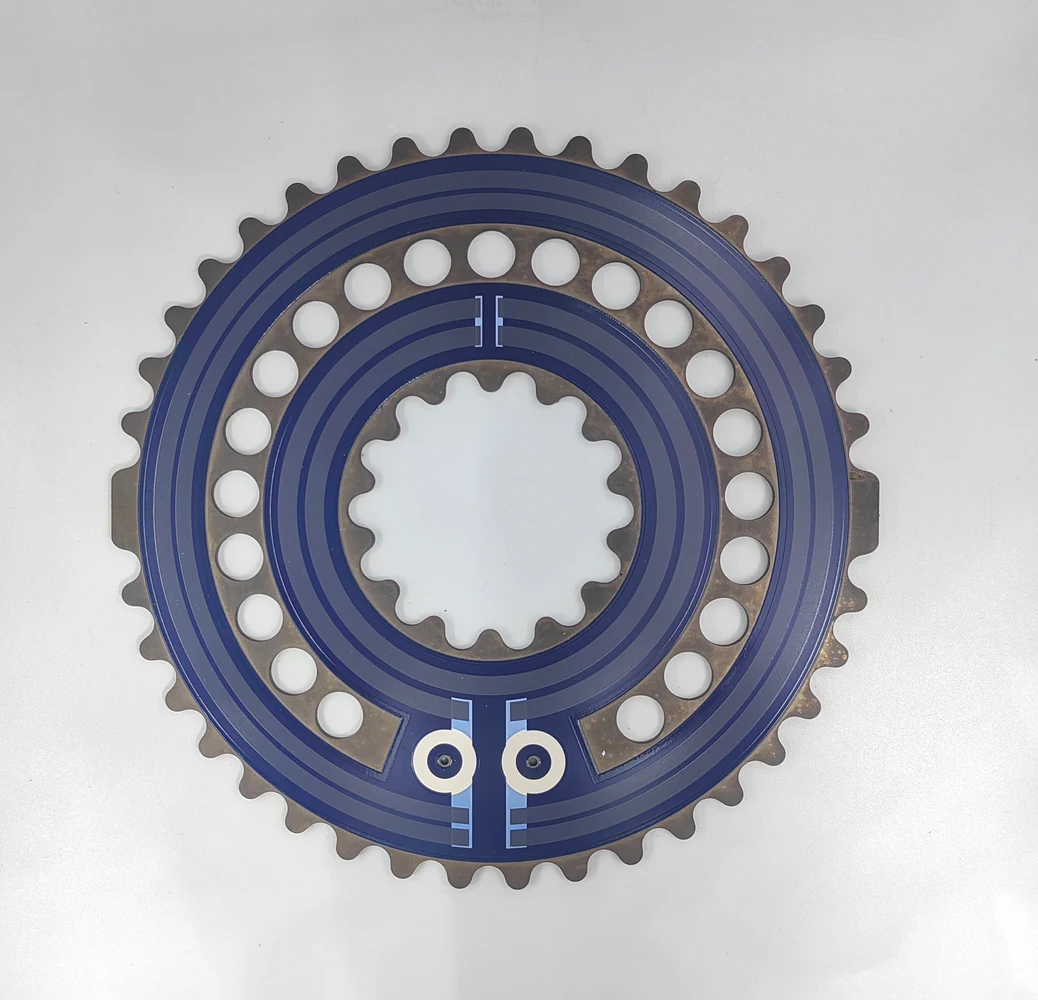
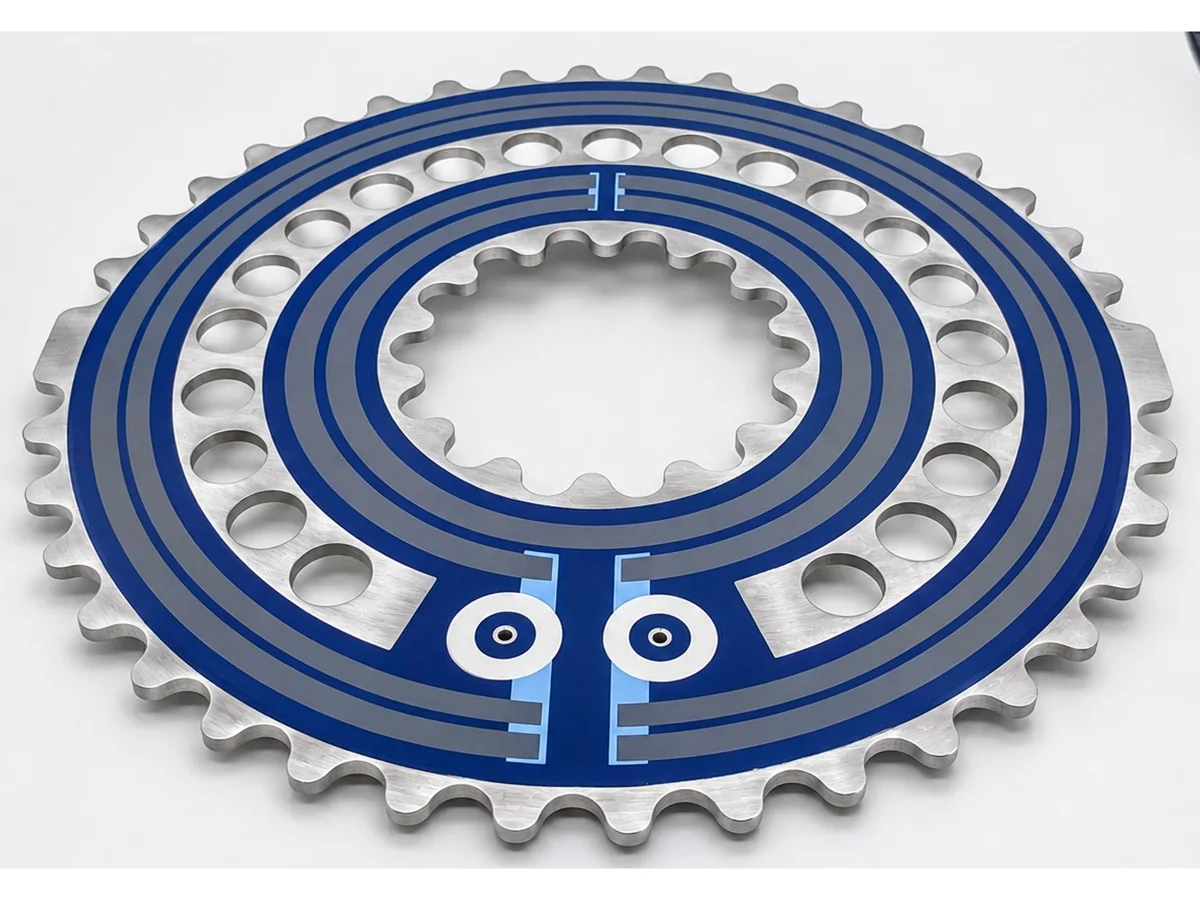
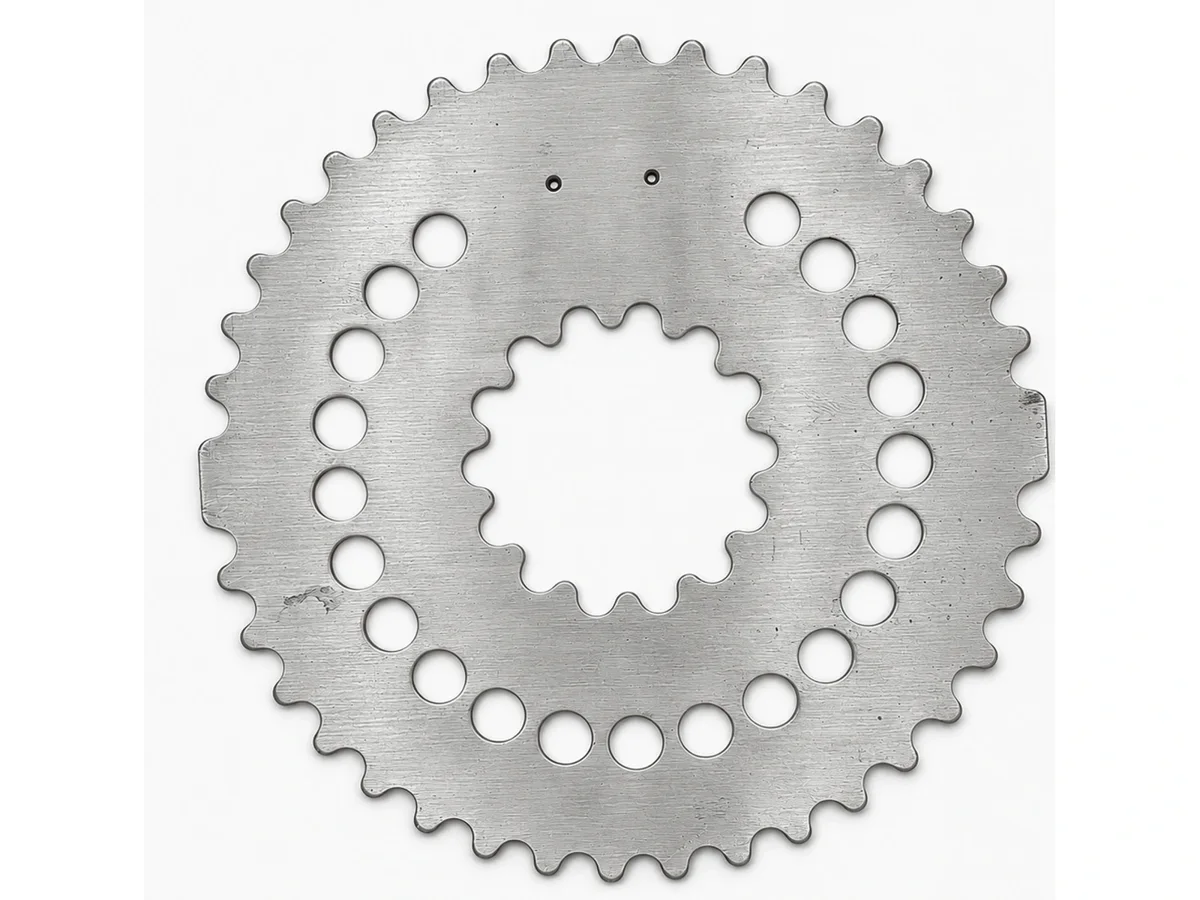
Orient the BS421A0 front drawing using the inner profile and paired contacts visible in the front photograph. Use the oblique view of the patterned face and center opening to confirm which face the drawing shows, and use the rear view to identify the edge profile and hole pattern. Use a dimensioned drawing section or side detail that actually shows the sensing surface and its mating interface to locate the point.
Mark the temperature point with a dimensioned reference to drawing features that remain identifiable after mounting. Record the face, position relative to the center opening, and orientation relative to the paired contacts or an identified hole. Show the supporting and contacting surfaces so another setup can reproduce the mount and probe placement. Identify the measured body and location: the heater’s ring surface, a separate solid mating part or load, or a specified point in the process medium. Each reading belongs to its own physical point and depends on the heat path between that point and the heater.
Calculate the first crossing and the fractional interval
For time to the absolute target T_target, use the recorded onset of heater input and the first qualifying temperature crossing at the named point. If the starting point is already at or above target, first check whether the run is eligible. Report zero only if the agreed rule accepts the temperature event and the evidence places it at the defined actual-input onset. An eligible baseline observation before onset or an initial reading after onset does not establish coincidence. If the rule does not count the qualifying initial temperature, label a later qualifying event as observed. It establishes the exact first-event time only when the agreed rule and evidence exclude every earlier qualifying event. Otherwise use it for a supported upper bound and leave the exact first-event time unresolved. A rule requiring a colder start makes the run ineligible. For either metric, subtract the earlier event time from the later one when both are resolved to the required precision. If the earlier event lies in [a,b] and the later event in [c,d], and the required order is feasible, a conservative outer bound is max(0, c−b) through d−a. Apply any additional event-order constraints supported by the record. If no ordered pair is feasible, leave the duration unresolved and check the timestamps and event definitions. For an eligible run, apply the agreed timing and temperature rule and all supported constraints on feasible event times. Report on time if the evidence confirms any qualifying event by the deadline, including equality for an inclusive deadline. A supported upper bound can establish this even when the exact first-event time is unknown. Report missed if the evidence excludes every qualifying event by the deadline, as when the verified first qualifying event is bounded wholly after the deadline. Otherwise report unresolved. A wholly late bracket for a later observed event leaves the outcome unresolved if an on-time event remains possible and unconfirmed.
Check that the observed initial state belongs to the applied step and that the established steady final temperature is greater than the initial temperature. For a documented rise from initial Tᵢ to steady final T𝒇, both on the same temperature scale, calculate T₁₀ = Tᵢ + 0.10(T𝒇 − Tᵢ) and T₉₀ = Tᵢ + 0.90(T𝒇 − Tᵢ). On that response, use the first qualifying upward crossing of T₁₀ and the first qualifying upward crossing of T₉₀ that follows it. Apply the declared sampling or interpolation rule and use matching time units. Heater-input onset is unnecessary if the record independently identifies that response and its initial and steady final states. If one sampling interval spans both thresholds, the first sample above 90% cannot identify both crossing times. Use the ordered-event bound above when valid evidence brackets the required crossings and the agreed rule permits bounds. Treat a crossing as the first only if earlier observations in its search interval exclude a hidden qualifying crossing under the declared rule. If a gap could conceal one, report the observed crossing or supported bound and state what it covers. Leave the interval unresolved if the evidence cannot determine or bound it.
| Requirement | Timing definition | Evidence needed |
|---|---|---|
| Absolute time from heater-input onset to target | Elapsed time from the defined onset of actual heater input to the first qualifying temperature event at the named point. | Use synchronized input and temperature records from the specified initial condition and test setup; apply the method’s start-eligibility rule. |
| Complete the 10–90% rise | First qualifying upward 10% crossing to the first qualifying upward 90% crossing that follows it on the same response | Confirm an observed initial state tied to the same positive step response, an established steady endpoint Tf greater than Ti, and the sampling and crossing rules. Use ordered crossing brackets where the record supports bounds. |
| Decide whether the absolute target was reached by the deadline | Apply the deadline decision rule in the calculation section. | Use the synchronized records for the specified temperature point and starting condition, together with any supported constraints on event times. |
What a record without a final plateau can establish
An absolute-target crossing can be assessed before the heater settles: it is defined by the chosen threshold at the specified point, independently of the ultimate plateau. Retain the trace and the result or bound supported by the method above. A missing final temperature affects the normalized step rise because its two temperature levels depend on the steady endpoint.
A 10–90% interval depends on an established final temperature for the stated conditions. When a trace is still changing at the end and the steady value is unknown, hold that calculation. If the last sample changes when the record is extended, using it as the final value also changes both fractional thresholds. The mount, interfaces, and surrounding medium affect the heat paths, and probe construction and thermal contact affect the indicated response. Capture those conditions before comparing rise intervals or interpreting differences between traces at the same nominal location.
Record enough of the transient to verify the criterion
For absolute time to target, record actual heater-input onset under the agreed rule and the temperature trace on a common clock. Document the drive including idle input or a ramp. For a fractional interval, verify the step and endpoint evidence using the method above. For a step-response comparison, specify the applied step and the conditions under which the steady final temperature is established. Document the initial temperature, mounting and interface conditions, surrounding medium, and sampling duration. Identify the attached thermal load and its condition during the test, or explicitly record that the setup was unloaded. For a contact surface probe, identify the effective sensing region and describe how it makes contact at the drawing location. Capture the interval needed to resolve the crossings and, for a fractional rise calculation, enough of the response to establish the steady final temperature. Keep the original trace with the threshold and time calculations. Record the temperature sample timestamps or interval, the permitted gap and interpolation rules, and the criterion used to establish a steady final temperature.
First arrival and subsequent temperature stability answer different requirements. If the process requires staying within a band, record that separately from the first crossing.
Put the drawing, fixture, and acceptance criteria together
Provide the marked drawing, mounting detail, timestamped temperature record and result sheet with the test conditions and acceptance rule. Attach the synchronized electrical-onset record for absolute timing, or the independently documented step and crossing evidence required for a stand-alone fractional result.
List the absolute time to target and the fractional rise interval as separate results. For each, state the named point and units, give the timing result or supported bounds, and identify what prevented a determination where applicable. Put any separate soak criterion on its own line and retain its governing specification.
Questions for the design review
Can the drawing's time-to-temperature target serve as a measured warm-up time?
The drawing target states the requirement. To assess a measured warm-up result against it, confirm the drawing’s start and end events and use those events to time the run. For the power-on metric used here, record actual heater-input onset and temperature at the specified point on a common clock. Document the starting temperature, fixture, load condition and applied drive.
Can I use the last temperature sample to calculate 10–90% rise time?
Use that value only if the evidence establishes it as the steady final temperature for the stated conditions. When the steady value is unresolved, hold the fractional calculation and report any absolute crossing supported by the trace.
Does touching the target establish that the temperature stayed in range?
A brief touch or a sample exactly at target counts only if it meets the agreed crossing rule. Time it to the resolution that the sampling permits. Dwell requires separate valid coverage under the agreed band and gap rules. The guide “Heater Soak Timing: Count Only the Temperature History the Process Accepts” covers that decision.
Prepare an engineering RFQ
- Dimensioned drawing with front and rear orientation references and a section or side detail showing the sensing surface, mating interface and temperature point
- Fixture and mounting description with contact surfaces, interfaces, surrounding medium, and identification of the attached thermal load and its condition during the test, or an explicit statement that the setup was unloaded
- Temperature sensing point, probe type, and probe contact arrangement
- Initial temperature and raw timestamped temperature record. For absolute timing, supply actual heater input on the same time base with its onset rule and drive profile, including idle input or ramp. For stand-alone fractional timing, provide independently documented evidence tying the temperature record to the same applied step, initial and steady final temperatures and ordered crossings; electrical-onset timing is optional.
- Absolute target temperature, allowed elapsed time, and crossing convention
- Applied positive step and initial state tied to it; steady final temperature and stability criterion; actual timestamps or sample interval, allowed gaps and interpolation rule; ordered 10% and 90% crossing definitions and required interval.
Related engineering resources
- Heater Soak Timing: Count Only the Temperature History the Process Accepts
- Ceramic Step-Response Tests: Separating Thermal Poles from Sensor Lag
- BS421A0 Annular Stainless Steel Heater